
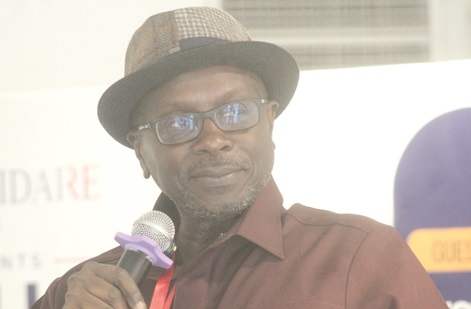
Legal scholar and governance expert, Prof. Kwaku Asare, has proposed five institutional and civic reforms to strengthen Ghana's democracy and reposition political parties to fulfil their constitutional mandate of promoting national development.
He said the country must recover its political parties, state institutions, Parliament, citizenship and commitment to development to reverse growing patronage, excessive partisanship and weak governance.
"Until we recover our political parties, our institutions, our citizenship and our commitment to development, the state will remain something to be conquered rather than a public trust to be governed," he said.
Prof. Asare made the remarks at a public forum organised by anti-corruption and policy think tank, Solidaire Ghana, in Accra last Tuesday on the theme: "Political Parties: Original Vision and Current Realities".
Recover political parties
Prof. Asare urged political parties to return to ideas instead of personalities by replacing monetised internal elections with broad grassroots participation.
He proposed that aspirants should secure verified endorsements from party members across the country instead of relying on financial strength to contest leadership positions.
He also called for campaign expenditure limits, shorter election seasons, regular audits of party finances and the establishment of an independent commissioner for political parties to regulate, investigate and enforce compliance with party laws.
He further advocated a clear separation between political parties and the state through a depoliticised public service, merit-based appointments to state institutions and stronger independence for oversight bodies, including the Auditor-General, the Office of the Special Prosecutor and the judiciary.
"Political parties are means. Ghana is the end. When we forget that distinction, democracy becomes a contest for power. When we remember it, democracy becomes a vehicle for progress," he said.
Parliament and citizens
Prof. Asare also called for greater institutional autonomy for Parliament, cautioning against executive interference in parliamentary leadership, MPs serving on boards of state-owned enterprises and political parties demanding financial contributions from legislators.
He urged citizens to reject blind partisan loyalty, defend state institutions and insist on the equal application of the law, stressing that democracy depended on active citizenship.
Political parties, he said, should be judged by improvements in education, health care, infrastructure, jobs and opportunities rather than electoral victories.
"The question is not whether the NDC or the NPP will win.
The question is whether Ghana will win," he said, urging sustained public demand for accountability.
Reflections
A leadership and governance expert at Ghana Institute of Public Administration, Prof. Kingsley Senyo Agomor, said although political parties exist to promote national development, they had fallen short of citizens' expectations.
While supporting the idea of state funding, he said weak accountability systems and opaque party financing would make effective oversight difficult.
A Professor at the University of Ghana's Department of Political Science, Prof. Rosina Foli, said successive governments had undermined constitutional provisions for national development planning by introducing politically driven programmes, leading to abandoned projects and waste.
She said abandoned projects waste taxpayers’ money and supported calls for sustained citizen pressure to ensure long-term national development plans survive changes in government.
Political scientist and Fellow at the Ghana Centre for Democratic Development, Prof. John Osae-Kwapong, said although Ghana's peaceful transfer of power had strengthened democracy, governance practices remained largely unchanged.
He warned that entrenched partisanship could erode public confidence unless citizens continued to demand accountability and better governance.
