
The Minority Caucus in Parliament has called for the establishment of a parliamentary committee of inquiry to investigate the work of the seven-member Anti-Flood Taskforce set up to address the country’s perennial flooding.
The caucus said the committee should examine the conduct of the taskforce and the relevant government ministries and agencies in the lead-up to last Monday’s flood disaster in Accra.
It said the inquiry should establish what work, if any, the taskforce, chaired by the Deputy Chief of Staff in charge of Operations, Stanislav Xoese Dogbe, had undertaken since its inauguration, the funds allocated to it and how those resources were utilised.
It should also determine the planned and implemented mitigation measures and why they failed to prevent or significantly reduce the impact of what it described as foreseeable seasonal flooding.
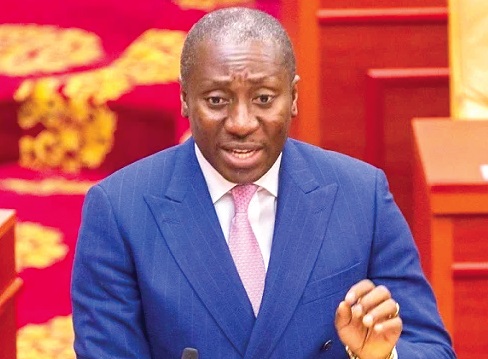
Addressing a press conference in Parliament last Tuesday, the Minority Leader, Alexander Afenyo-Markin, said officials found culpable of negligence or dereliction of duty must be held accountable.
Pending the outcome of the inquiry, he called on all members of the taskforce to step aside.
“This is not a presumption of guilt; it is a basic standard of accountability that any institution facing serious questions over its conduct should observe, so that investigations can proceed without interference.
“This House owes the people of Accra nothing less than a full and honest accounting of what went wrong and who was responsible,” he said. No meaningful intervention
Mr Afenyo-Markin recalled that last year, the President announced the formation of the Anti-Flood Taskforce to prepare the capital for the rainy season.
He said the taskforce had assured the public that lessons had been learnt and that this year would be different.
However, he argued that last Monday’s floods showed the taskforce had failed to deliver meaningful interventions on the ground.
“If serious drainage works, desilting and flood mitigation measures had been undertaken, the impact of the heavy rains would have been significantly reduced,” he said.
The Minority Leader noted that the latest floods were not the first this year, recalling that parts of Accra had already been inundated weeks earlier.
He said that after returning from an official trip abroad, the President requested a fresh presentation and mapping of the affected areas, rather than pointing to measures already undertaken by the task force.
According to him, the need for a post-disaster assessment suggested inadequate preparation before the rains.
Sanitation concerns
Mr Afenyo-Markin also criticised the government's sanitation policy, arguing that waste management contracts had been discontinued without adequate replacement arrangements.
He said the resulting gap had encouraged unregulated waste collectors, popularly known as “Aboboya” operators, some of whom had been captured on video dumping refuse into drains.
Blocked drains, he said, remained a major cause of urban flooding.
While acknowledging that climate change had increased rainfall intensity, he maintained that government had a responsibility to prepare adequately.
He argued that with seasonal forecasts issued annually by the Ghana Meteorological Agency and flooding risks already known, the taskforce should have addressed encroachment on watercourses and other vulnerabilities before the rains, rather than citing them after the disaster.
