
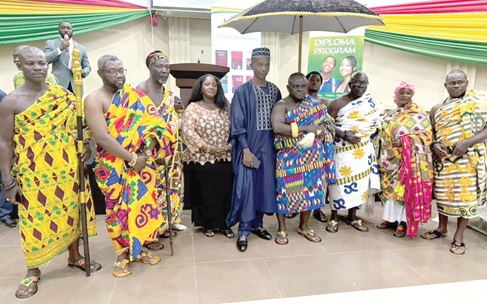
A 142-page book, The Galamsey King Must Dance Naked and Other Stories From The Red Earth, telling compelling stories to expose the environmental and social destruction caused by illegal small-scale mining (galamsey) in the country has been launched in Accra.
The book highlights how galamsey pollutes rivers, destroys forests and farmlands, harms communities and threatens the country's future.
Described as more than fiction, the book serves as a warning and call to action, urging environmental activists, policymakers and citizens to confront the consequences of illegal mining and work together to protect Ghana's natural resources.
Written by a Mechanical Engineer, Martey Justice Akita, and published by Larajah Limited, the book draws on the author's rich experiences to deliver a powerful message about environmental conservation and sustainable development.
Firsthand witness
The author said his decision to write 'The Galamsey King Must Dance Naked and Other Stories From the Red Earth' was inspired by his travels across the country, where he witnessed the devastating environmental destruction caused by illegal mining.
He recounted his shock at discovering that galamsey had spread beyond southern Ghana to the Upper West Region, describing the experience as deeply disturbing and the catalyst for writing the book.
Mr Akita also reflected on his personal journey of living with a disability and the academic challenges he overcame through determination.

He said these experiences strengthened his resilience and commitment to using storytelling to address national issues.
He posed a thought-provoking question that inspired the book's central message: "Can we eat gold? Can we drink gold?" — a reminder that Ghana's natural resources, particularly its land and water, are far more valuable than the wealth generated through destructive mining practices.
Looming national crisis
The Akyempimhene of Kwahu Obo, Barimah Dr Addofo Kissi I, cautioned that the country would face a looming national crisis if illegal mining continued unchecked, urging decisive action to safeguard the country's environment and future.
He said unchecked galamsey could trigger a national water crisis, reduce food production, increase public health costs and leave future generations with polluted rivers, degraded forests and barren lands.
He explained that while mining had long been part of Ghana's history, illegal mining had evolved into a highly mechanised and destructive enterprise driven by rising gold prices, weak law enforcement, corruption, poverty, political interference and foreign involvement.
National values
The Chairman of the National Development Planning Commission (NDPC), Nii Moi Thompson, called for comprehensive institutional reforms and a shift in national values to effectively combat galamsey, cautioning that weak institutions remained the greatest obstacle to protecting Ghana's environment.
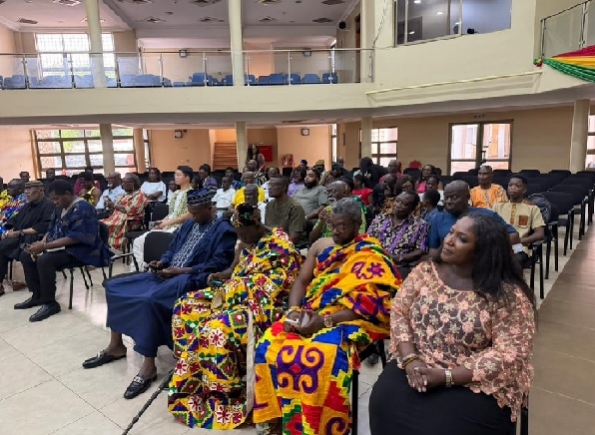
Mr Thompson reflected on his involvement in a major research project on artisanal and small-scale mining more than two decades ago which revealed the complex structure of the mining sector, involving miners, financiers, migrant workers and foreign investors, and produced policy recommendations that were never fully implemented.
He observed that while artisanal mining had existed in Ghana for centuries, illegal mining had evolved into a highly destructive activity that threatened livelihoods and public health.
He stressed that the greatest danger was not to the earth itself, but to human survival through polluted water, contaminated food and environmental degradation.
Mr Thompson said the nation must strengthen its institutions by enforcing laws, improving policies and public service systems, promoting ethical leadership, and cultivating values that prioritise environmental stewardship and national development.
He revealed that the NDPC was developing a long-term national development framework and a "New Values for a New Society" initiative aimed at building a sustainable future beyond political cycles.
