
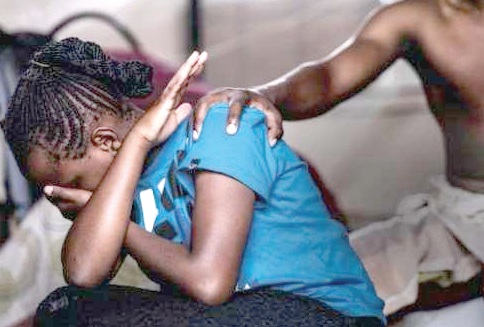
On the 12th International Day for the Elimination of Sexual Violence in Conflict, Ghana’s own experience shows that the line between “peacetime” and “conflict” abuse is far thinner than commemoration allows.
On June 19, 2026, the world marks the 12th International Day for the Elimination of Sexual Violence in Conflict.
The day honours victims and survivors and renews commitments to prevention and accountability wherever sexual violence is used as a weapon of war.
For Ghana, a country that prides itself on relative peace and democratic stability, the day can feel like it belongs to someone else's headlines, such as Sudan, the DRC and the Sahel.
But Ghana does not need to look abroad to find the conditions this day warns against.
It needs to look at Bawku and then at its own schools.
What Bawku already shows us
Since 2021, the Kusasi–Mamprusi conflict has escalated into repeated clashes, curfews and military deployments, with attacks continuing into 2025.
Schools have been affected, services disrupted, and insecurity has deepened economic hardship and youth frustration.
Women’s groups, including WoMNet, have warned that women and children now face heightened risks of displacement, loss of livelihoods, and sexual and gender-based violence, and have called for their protection to be central to mediation efforts.
This is how the risk of conflict-related sexual violence emerges in practice: not only in declared wars, but wherever displacement, weak institutions, armed actors, and overstretched justice systems converge.
Bawku already reflects that reality.
The conflict did not invent the vulnerability
In places like Bawku, the risks facing women and children are rooted in long-standing gender inequality, widespread domestic violence, and weak protection systems.
National data shows that over a quarter of women in Ghana have experienced domestic violence, with many cases going unreported due to stigma, fear and limited access to support.
Conflict simply worsens these conditions and further strains already fragile institutions.
The same patterns appear outside conflict zones.
Recent cases of sexual misconduct in schools across Ghana highlight how unequal power relations and weak accountability enable abuse in everyday settings.
While the contexts differ, both reflect the same underlying problem: systems fail to protect the vulnerable, allowing perpetrators to act with impunity.
Conflict-related sexual violence, therefore, cannot be addressed in isolation.
It requires confronting the broader, everyday structures of inequality and institutional failure that make such violence possible in the first place.
Two crises, one continuum
Ghana is often, correctly, held up as a model of stability in West Africa.
That makes it tempting to treat Bawku as an isolated security problem and the school scandals as an isolated education-sector problem, two unrelated news cycles.
They are not.
Both reveal the same underlying weakness: protective systems that exist on paper but depend on individual courage, viral videos, or international pressure to function.
The Ghana Education Service’s code of conduct explicitly prohibits sexual harassment of students, but it took a leaked video, not the code itself, to trigger an interdiction.
Ghana has accountability frameworks for displaced and conflict-affected communities.
If reporting and accountability only activate after a scandal goes viral or a conflict escalates to the point of military deployment, then the system is not built for prevention.
It is built for damage control.
And damage control, by definition, arrives after the damage is done.
What prevention actually requires
Commemorating June 19 should not distract from the conditions that enable abuse.
Prevention requires stronger enforcement of existing protections in schools, including consistent accountability for misconduct; integrating the protection of women and children into peacebuilding and mediation efforts in Bawku; and creating trusted reporting mechanisms that communities and survivors are willing to use.
Above all, Ghana must recognise that the normalisation of abuse in peacetime is not only a social concern but also a security issue that heightens vulnerability during periods of instability.
Beyond commemoration
The violence against displaced women in Bawku and the abuse scandals in Ghanaian schools are not unrelated.
Both reflect a common challenge: the misuse of power in environments where accountability is weak and protection systems fail.
Commemoration remains important because it keeps survivors visible and highlights the ongoing reality of conflict-related sexual violence.
Yet meaningful prevention requires action long before conflict erupts in classrooms, workplaces, homes and communities where power is exercised every day.
The writers are a Senior Researcher with the UN Institute of Disarmament Research in Geneva & the Ag Deputy Director, Women Youth Peace and Security Institute of the Kofi Annan International Peacekeeping Training Centre (KAIPTC) respectively
