

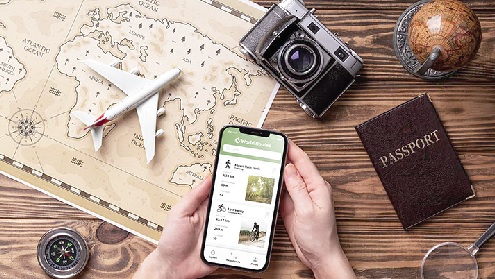
Not every journey begins at a bus station or airport. Increasingly, many now start on a smartphone screen.
We live in an era where technology has transformed almost every aspect of our lives, and tourism is no exception. Before travellers pack their bags, they are already exploring destinations digitally.
They stroll through hotel corridors, stand on mountain tops, admire museum galleries and even gaze across city skylines—all without leaving their living rooms.
Welcome to the age of digital tourism. For years, tourists relied on glossy brochures, travel magazines, photographs and recommendations from family and friends.
Today, however, digital technology has dramatically shortened the decision-making process.
A prospective traveller no longer has to imagine what a destination looks like. They can experience a convincing preview before committing their money.
At the heart of this transformation is Virtual Reality (VR). By wearing a VR headset, or increasingly, simply using a smartphone, users can immerse themselves in realistic three-dimensional environments.
They can turn around to inspect every corner of a hotel suite, wander through heritage sites, or admire breathtaking landscapes as though they were physically present.
The tourism industry quickly recognised the enormous marketing value of this innovation. Unlike many consumer products, tourism sells experiences rather than tangible goods. That makes digital immersion one of the most persuasive marketing tools available.
Hotels across the world now invite potential guests to take virtual tours of their rooms, conference facilities, spas and restaurants.
Airlines, cruise operators and destination marketers showcase attractions through interactive 360-degree videos. Museums, castles and archaeological sites increasingly offer digital walkthroughs that inspire future visits.
In many ways, this represents the evolution of the old saying: "Seeing is believing." Today's traveller wants to experience before purchasing. Digital tourism makes this possible.
The booking journey itself has also become smarter. Rather than switching between numerous websites, travellers can compare accommodation options, inspect room categories, explore nearby attractions and complete reservations within integrated digital platforms. Artificial intelligence, augmented reality and virtual reality are steadily merging to create seamless travel planning.
For destinations like Ghana, digital tourism presents exciting possibilities. Imagine a prospective visitor in Canada taking a virtual canoe ride on the Volta Lake, exploring Cape Coast Castle, walking through the bustling Makola Market, or joining the Homowo Festival digitally before deciding to book a trip. Such immersive experiences can convert curiosity into actual visitation.
This is especially significant because tourism promotion increasingly competes for attention in an overcrowded digital marketplace. Countries that invest in immersive storytelling are likely to enjoy greater visibility and stronger destination branding.
Digital tourism also serves people who may never travel physically. Students can visit historical monuments for educational purposes.
Elderly people or persons living with disabilities can experience world-famous destinations virtually. During global disruptions such as pandemics, virtual experiences help keep destinations alive in the minds of travellers until physical travel resumes.
Of course, no technology can replace the joy of feeling the sea breeze at Ada, smelling freshly prepared waakye in Kumasi, listening to drumming at a traditional festival or exchanging smiles with people along a dusty village road. Travel remains deeply human. It engages all the senses, not merely the eyes.
Yet digital tourism should not be viewed as a substitute for travel. Rather, it is an invitation - an appetiser before the main meal. It reduces uncertainty, builds confidence and inspires travellers to move from virtual curiosity to real-world adventure.
As technology continues to evolve, digital tourism will become even more sophisticated. Artificial intelligence, mixed reality and immersive storytelling are already reshaping how destinations present themselves to the world.
The challenge for Ghana's tourism industry is not whether to embrace these innovations, but how quickly and creatively it can do so.
After all, in today's connected world, the first journey is often a digital one. The real trip simply follows, or Africa, digital tourism is more than a technological trend - it is an opportunity to redefine the continent's global narrative.
For decades, Africa's image abroad has too often been shaped by external media, with disproportionate attention given to conflict, poverty and disease. Immersive digital technologies now enable African countries to tell their own stories, showcasing vibrant cultures, spectacular landscapes, ancient civilisations and thriving contemporary cities.
A virtual trek through the Simien Mountains of Ethiopia, a drone-assisted tour of the Pyramids of Giza, a 360-degree safari in the Serengeti, or an immersive walk through the slave heritage sites of Ghana and Senegal can inspire millions of potential visitors.
Digital platforms also offer affordable marketing opportunities for small tourism enterprises, community-based attractions and indigenous cultural festivals that may lack substantial promotional budgets.
In this sense, digital tourism is not merely about marketing destinations; it is about reclaiming Africa's voice, celebrating its heritage and expanding its participation in the global tourism economy.
