
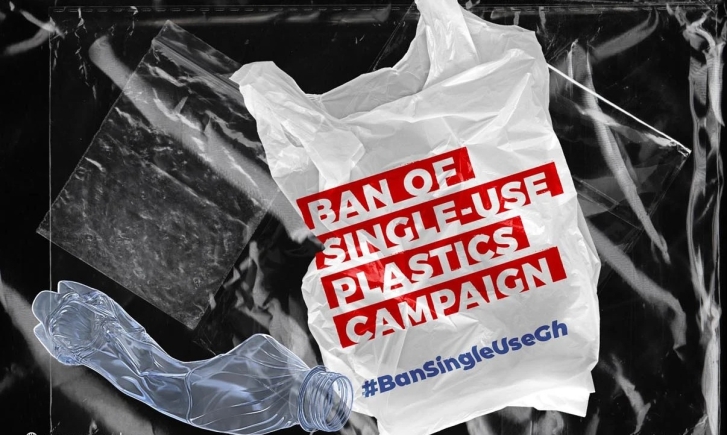
The Ghana Medical Association (GMA) has called on the government to ban single-use plastics in addition to the ban on styrofoam products used in packaging foods to protect the environment and sustain the health of the public.
The association said this measure could lead to a comprehensive solution to food safety.
The President of the association, Professor Ernest Yorke, made the call at the association's 26th annual public lecture in Koforidua in the Eastern Region last Friday.
He said the continued use of styrofoam and single-use plastics for food packaging had been one of the major causes of unsafe food in the country, with the attendant risks of diseases and a rising health budget.
The event, dubbed: "Food Safety in Contemporary Ghana: Public Health Concerns for the Consumer which focus on Food Safety”, was attended by medical practitioners, heads of departments and agencies, religious leaders, staff of the security services, students from senior high schools, traditional rulers and members of the public.
Prof. Yorke said numerous factors were rendering food unsafe for consumption in recent times, indicating that these encompassed every stage of the food chain.
He stated that the phenomenon started from food production, harvesting, transportation, processing, storage to final preparation, sale and consumption.
He added that failure at any point along the chain could have profound consequences for public health.
Intervention
The Government, through the Environmental Protection Agency (EPA), is phasing out styrofoam products, and Prof. Yorke said along with a ban on single-use plastics, it would represent an important environmental and public health intervention.
If implemented effectively, together with affordable and sustainable alternatives, he said, this would improve waste collection, recycling, public education and stronger enforcement of environmental regulations.
The GMA President said this had the potential to reduce plastic pollution and contribute to cleaner urban environments.
"We believe that the ban must be expanded to include single-use plastics in order to achieve a comprehensive solution,” he said.
Cold-chains
Prof. Yorke explained that contamination might occur long before food reached the consumer, and that poor agricultural practices, unsafe irrigation water, indiscriminate use of chemicals, inadequate storage, interrupted cold chains, poor hygiene during transportation, and unsafe food handling increased the risk of microbial and chemical contamination which had been associated with Ghana and many other low and middle-income countries.
These, he emphasised, contributed to food-borne diseases in such countries.
He said food safety was not the sole responsibility of producers and regulators, and that consumers also had an important role to play.
Good decisions
Consumers, the GMA President stated, should, therefore, take good decisions regarding where food was purchased, stored and prepared, how long to keep the cooked food at room temperature, and even how to dispose of such packaged foods, taking into consideration the implications of individual's health and that of the community.
Prof. Yorke said the recent floods in Accra and other parts of the country was an indication that environmental health and food safety had become inseparable since flood waters frequently contaminated drinking water sources, food preparation areas, markets and food storage facilities.
He further explained that flood waters normally disrupted sanitation systems, increased the spread of faecal contamination, compromised refrigeration and cold-chain systems during power outages, and created conditions for outbreaks of diarrhoea, diseases and other food and water-borne infections.
Prof. Yorke, who indicated that healthcare professionals would continue to educate the public on food safety using evidence-based information, however, expressed the hope that the lecture would come up with practical recommendations capable of informing national policy, improving consumer awareness and strengthening collaboration among all stakeholders.
He argued that food safety must move beyond contamination control to confront the slow violence of diet-related diseases in an era of ultra-processed foods.
Nutrition transition
A Public Health Nutritionist at the University of Ghana, Prof. Amos Laar, stated that Ghana's nutrition transition had made old boundaries unstable, adding that food insecurity and micronutrient deficiencies now coexisted with obesity, hypertension, diabetes and other non-communicable diseases (NCDs).
Such conditions, he indicated, were treated in clinics and hospitals, but that their origins were also upstream in food environment, market, pricing, labelling, marketing, regulatory gaps, commercial power and everyday constraints that shaped consumer choice.
Prof. Laar said given that some unsafe foods caused harm immediately while others caused harm silently, cumulatively consumer protection must include protection from products, practices and policies that normalised excessive intake of health-harming ultra-processed foods.
Writer's email
haruna.wunpini@\graphic.com.gh
