
Ghana has spent nearly a decade building one of Africa's most successful national brands, a warm, welcoming, business-ready "gateway to Africa" anchored by the Year of Return and Detty December.
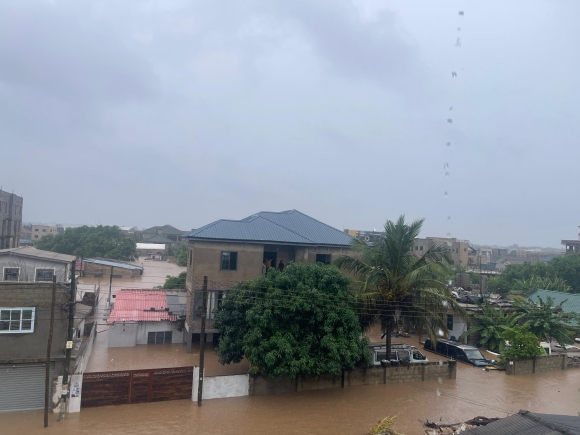
The June 2026 floods, carried live to BBC, CNN, Al Jazeera and Reuters audiences within hours, did not just damage roads and homes. They tested how much of that brand is real, and how much of it depends on the cameras never turning toward the drains.
Nation branding is usually discussed in the language of tourism boards and marketing budgets: logos, slogans, diaspora campaigns, festival calendars. But a brand, for a country as much as for a company, is ultimately a promise about what will happen when things go wrong. Ghana's promise, cultivated since the 2019 Year of Return, has been one of welcome, stability, and competence, a safe, hospitable, forward-moving hub for the African diaspora, for tourists, and for investors. The flooding of June 28 and 29, 2026, and the international coverage that followed, tested that promise in front of a global audience, at the worst possible moment on the calendar and at a moment when Ghana's economic story was finally starting to turn heads for the right reasons.
A flood the whole world watched
Within a day of the rains hitting Accra, the flooding was being reported by BBC, CNN, DW, Al Jazeera, Reuters, the Associated Press, ABC News, and the New York Post, alongside wire coverage that grouped Ghana with neighbouring Ivory Coast under a single grim headline: floods and landslides across two West African capitals had left at least two dozen people dead. Reuters ran footage of residents wading through floodwater in Accra; the Associated Press described a mother and child swept away in the Achimota-Agbogbloshie district; Al Jazeera's coverage of "fire and floods" hitting the capital ran alongside images of a rubber factory burning as firefighters struggled to reach it through submerged streets. Social media amplified all of it, with clips from Kwame Nkrumah Circle and the Odawna rubber market circulating internationally within hours, often stripped of context about which neighbourhoods were worst affected and which were not.
That distinction, between a capital that suffered severe, tragic flooding in specific low-lying districts and a capital erroneously perceived abroad as entirely underwater, became its own minor front in the story. Ghanaian travel and tourism outlets moved quickly to correct the record, publishing explainers reassuring prospective visitors that "the entire city was not underwater" and that Accra "remains one of Africa's great cities, resilient, vibrant and welcoming." That such messaging was necessary at all says something important: within days of the disaster, Ghana's tourism sector was already playing defence against its own headlines, managing a global perception gap opened by a few viral clips rather than by the scale of the flooding itself.
A brand built on return, tested by recurrence
Ghana spent seven years building the world's warmest invitation. December was next on the calendar.
Ghana's modern nation brand rests substantially on one campaign: the Year of Return, launched in 2019 to mark four hundred years since the first recorded arrival of enslaved Africans in Virginia, and inviting the African diaspora home. What began as a single commemorative year evolved into Beyond the Return, then into an annual institution, "December in GH," popularly known as Detty December, a month of concerts, festivals, and homecoming events that has become, by most accounts, the signature cultural export of Ghana's tourism strategy and a genuine rival to Lagos for the diaspora travel market. The results have been real: Ghana recorded 1.3 million international tourist arrivals in 2025, and domestic tourism drew a further 1.79 million visits to tourist sites nationwide, according to the country's own tourism authority.
But the same 2025 report that celebrated arrival growth also recorded a decline in tourism receipts, from US$4.83 billion in 2024 to US$4.34 billion in 2025, even as visitor numbers rose, a signal that the sector's growth is not as strong as arrival figures alone suggest. Ghana's tourism board has openly worried about losing ground to Lagos, which has aggressively staged its own competing December festivities in recent years. Into that already competitive environment landed a flooding disaster in the final week of June, six months before the next Detty December season and squarely inside the news cycle that shapes how international travel media, diaspora influencers, and prospective visitors form their impressions of the country for the year ahead. A brand built on the promise of a joyful, well-run homecoming now has to coexist, in the same search results and the same social feeds, with footage of Accra's commercial districts underwater.
The story behind the story
International audiences saw a flood. Ghanaian researchers have been describing a system.
What makes the reputational exposure particularly sharp is that this was never framed, even domestically, as simply an act of nature. Ghana's own Interior Minister publicly acknowledged that the government's response to the rainfall "could have been better," a rare admission made after the main opposition party publicly criticised the state's preparedness and response. Commentary that circulated alongside the international coverage noted that Ghana has invested close to US$1 billion in flood control measures over the past two decades, and Accra still floods, a line that travels easily across borders precisely because it is so quotable and so damning. Ghana's academic literature backs the critique with more precision than any headline: researchers have repeatedly traced Accra's flooding to weak institutional and legal frameworks, rapid unplanned urban growth, and flood interventions, dredging, demolitions, that prove ephemeral within a few rain events because the underlying causes are never addressed (Abass, 2020; Owusu & Obour, 2024; Poku-Boansi et al., 2020).
For a country trying to brand itself as competently self-governing, this is the more dangerous story, more dangerous than the flood itself. A single freak storm is a weather event. A pattern, documented across more than a decade of peer-reviewed Ghanaian research and now surfacing in international headlines about a billion dollars spent without visible results, reads as a governance story. International audiences, and more importantly the investors, insurers, and travel decision-makers among them, do not need to read the literature to absorb that framing. They only need to see the same city flood on the same news channels every few years and ask why.
When a flood becomes a data point
Brand image and investor confidence are not separate conversations. They are the same conversation, told to different audiences.
Ghana's economic brand had genuine momentum heading into 2026. Fitch upgraded the country's credit rating to 'B-' with a stable outlook in 2025, citing progress on debt restructuring, falling inflation, and a strengthening cedi, which was among the best-performing currencies in the world that year. As UNDP officials working on Ghana's sovereign ratings have put it, these ratings shape how global capital markets perceive the country and directly affect its borrowing costs, which means the same reputational currency that tourism campaigns spend years building is also, quietly, priced into every Eurobond issuance. Investors, reinsurers, and multinational firms scouting West African locations read the same wire stories as prospective tourists; they simply draw different conclusions from them, less "will I feel welcome," more "how well does this government manage risk."
The government's own emergency response fed that second reading. Rather than route emergency drainage and road works through Ghana's standard procurement system, officials deployed the Ghana Armed Forces' 48 Engineers Regiment directly, a decision defended publicly on the grounds that it would help avoid lengthy procurement procedures. It is a reasonable emergency measure. It is also, read by an external audience assessing institutional strength, a public admission that the country's own procurement rules are treated as an obstacle to be worked around once a crisis begins rather than a system that functions under pressure. Brand image and country risk assessment are not competing narratives about Ghana. They are the same narrative, read by different departments of the same international audience.
The "Beyond Aid" paradox
A brand built on self-reliance keeps needing outside help to recover.
Ghana's other major branding project of the past decade, "Ghana Beyond Aid," launched in 2017 with the explicit ambition of a country that funds its own development and reduces its dependence on donor resources. Independent research on public perceptions of the vision has found it broadly welcomed but consistently under-resourced, with the mechanisms needed to realise it "largely absent" even years after launch. Recurring, underinsured flood disasters sit awkwardly against that ambition. Globally, fewer than five percent of disaster losses in developing countries are insured, compared with roughly half in advanced economies, and in Ghana specifically an estimated seven in ten people carry no insurance coverage at all, according to UNDP Ghana. Every flood season that ends with households, businesses, and government leaning on NGO relief, international humanitarian appeals, and donor-funded reconstruction is a flood season that quietly contradicts the country's own self-reliance narrative on the same international stage where that narrative is meant to be winning credibility.
The most pointed detail here is not a failure of capacity but a failure of follow-through. Ghana, together with the UNDP and international insurance partners, has already designed, tested, and validated a parametric flood insurance scheme for Greater Accra, one that would release funds automatically once a rainfall threshold is crossed rather than waiting on discretionary government decisions. It remains unoperationalised at scale. A country cannot credibly brand itself as moving beyond aid while its own proven, ready-to-deploy alternative to post-disaster dependency sits unused through a third, fourth, and now a record-breaking flood season.
What messaging can't fix
A defensive explainer can correct a misconception. It cannot correct a pattern.
It is worth being precise about what actually damaged Ghana's brand image in June 2026, because the answer shapes what would actually repair it. The viral misconception that the entire capital was underwater was a genuine, correctable communications problem, and Ghana's tourism voices responded to it quickly and reasonably, clarifying which neighbourhoods were affected and reassuring prospective visitors that the city remained functional. That kind of rapid-response messaging matters and should continue. But it addresses only the smallest part of the exposure. The larger reputational risk, the one that shows up in credit rating commentary, in disaster-risk assessments, and in the quotable line about a billion dollars spent without results, cannot be managed with a clarifying blog post, because it is not a misconception. It is an accurate description of a recurring institutional pattern that Ghana's own researchers have been documenting since at least 2013 (Okyere et al., 2013) and that has not materially changed by 2026.
This is the distinction that matters for anyone thinking seriously about protecting Ghana's international image going forward. Nation branding campaigns can shape first impressions and correct viral misinformation in the days after a disaster. They cannot substitute for drainage maintenance, enforced zoning, an adequately funded NADMO, or an operational parametric insurance scheme, and international audiences, particularly the institutional ones that set borrowing costs and investment flows, are increasingly sophisticated about telling the difference between a country managing its narrative and a country managing its risk.
A brand is not just marketing
The next flood season will be graded on the same footage, unless the underlying story changes first.
Ghana's brand equity is real. The Year of Return did something few nation-branding campaigns ever achieve: it changed, durably, how a global diaspora and a global market think about a country. But brand equity of that kind is also unusually exposed, because it was built on a promise of welcome and competence that recurring, internationally televised flooding puts to the test every single rainy season. The floods of June 2026 did not erase seven years of careful brand-building. They did, however, hand the country's critics, its regional tourism rivals, and its credit analysts a vivid, well-documented, internationally broadcast argument that the promise and the practice have not yet caught up with each other. Whether that argument gains or loses force by the next Detty December, or the next flood season, will not be decided by a communications strategy. It will be decided by whether the drains get cleared, the zoning gets enforced, and the insurance scheme that has been sitting ready since before this disaster finally gets switched on.
The writer, Dr. Nancy Maame Akua Erskine-Sackey is at the Center for Graduate Studies and Research, KAAF University, Gomoa Fetteh Kakraba, Ghana
