
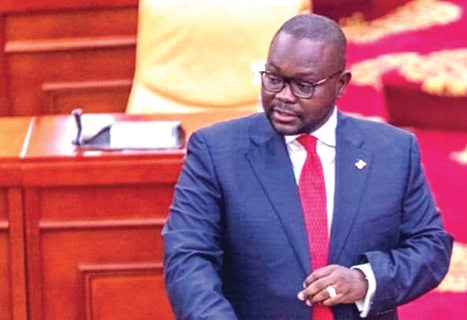
The New Patriotic Party (NPP) Member of Parliament (MP) for Bantama, Francis Asenso-Boakye, has called on the government to declare a National Flood Emergency Preparedness Exercise to strengthen the country's response to recurring floods.
According to him, the recent devastating floods, which have claimed lives and destroyed property in parts of the country, require urgent, coordinated and proactive measures to avert further disasters.
Making a statement on the floor of Parliament last Tuesday, Mr Asenso-Boakye, who is also the Ranking Member on Parliament's Select Committee on Local Government and Decentralisation, described the flooding incidents as a national emergency that could no longer be treated as a seasonal occurrence.
He expressed sympathy to families who had lost loved ones and to individuals whose homes, businesses and livelihoods had been destroyed by the floods.
Disturbing scenes
The Bantama MP said he was deeply disturbed by videos circulating on social media showing people being swept away by floodwaters, while others remained trapped in collapsing buildings as onlookers watched helplessly.
He said such heartbreaking scenes underscored the urgent need for decisive national action.
"Flooding has become one of Ghana's most persistent national challenges. This is not the time for political point-scoring. Floodwaters do not discriminate; they affect all Ghanaians alike," he said.
National exercise
Mr Asenso-Boakye proposed that the government institute a one-week National Flood Emergency Preparedness Exercise involving all key state institutions, including the Metropolitan, Municipal and District Assemblies (MMDAs), the National Disaster Management Organisation (NADMO), the Hydrological Services Authority and the security agencies.
He explained that the exercise should focus on desilting drains, clearing choked waterways, removing obstructions from water channels, pre-positioning emergency response teams and intensifying public education on flood preparedness and safety.
According to him, such a coordinated exercise would improve the country's preparedness and reduce the impact of future flooding incidents.
Mr Asenso-Boakye attributed Ghana's recurring floods to a combination of inadequate drainage infrastructure, weak enforcement of planning regulations, poor sanitation practices, rapid urbanisation and the growing effects of climate change.
He stressed that flooding should never become an accepted feature of the country's rainy season, arguing that Ghana already understood both the causes of the problem and the measures required to address it.
"What remains is the political will to sustain investment, enforce our planning laws, strengthen sanitation management and promote responsible citizenship," he said.
Collective responsibility
The Ranking Member called for stronger collaboration among the government, local authorities, communities and citizens to reduce the human and economic cost of flooding.
He said sustained investment in flood prevention, coupled with effective enforcement of planning regulations and improved public participation, was critical to building safer and more resilient communities across the country.
