
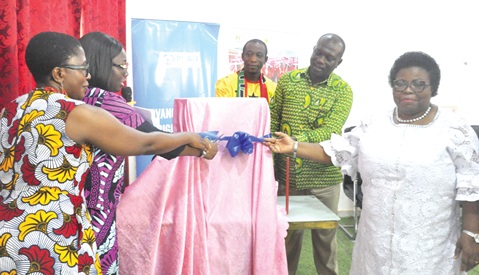
A research undertaken jointly by the University of Health and Allied Sciences (UHAS) and Reckitt Global Hygiene Institute (RGHI) in the United States has highlighted the need to integrate menstrual health in education in schools.
The research theme was ‘Breaking the Silence: Menstrual Hygiene Management and Adolescent Mental Health in Ghana.’
The abstract of the research was launched at the Fred N. Binka School of Public Health of UHAS at Hohoe.
A Research Fellow and the research Principal Investigator, Dr Sitsofe Gbogbo, said it was crucial for schools to provide private water, sanitation and hygiene (WASH) and disposal facilities for girls, and train teachers to support them.
She explained that menstrual health was a mental health issue, to which recognition must be given and acted upon with the appropriate assistance to girls.
“Menstrual experiences are shaped by social and cultural context, and addressing them must engage beliefs and norms, and not just products,” Dr Gbogbo added.
She pointed out that many adolescent girls in Ghana still faced challenges during menstruation, such as limited access to menstrual products, inadequate sanitation facilities, stigma and teasing.
They also lacked open discussion about menstruation, and those challenges could affect their confidence, emotional well-being, school attendance, overall development and educational outcomes.
The research findings revealed that male-led peer education was an effective strategy for fostering self-reported positive shifts in attitude and reducing menstrual stigma.
“Engaging boys as informed allies can transform school environments and promote empathy,” the study held.
It recommended integrating peer education into school curricula and engaging community stakeholders to address sociocultural barriers.
Partnerships
The Deputy Director General of the Ghana Education Service, Professor Smile Gavua Dzisi, said the service was committed to partnerships in research in matters of menstrual health.
She said as a result of the free sanitary pad distribution to institutions, girls were now attending classes regularly.
The Hohoe Municipal Chief Executive (MCE), Prosper Kumi, said the well-being of adolescents was a priority of the assembly and gave an assurance that every school would have proper sanitation facilities, including changing rooms for girls.
The Vice-Chancellor of UHAS, Professor Lydia Aziato, cautioned girls who could not abstain from sex to protect themselves with condoms.
