
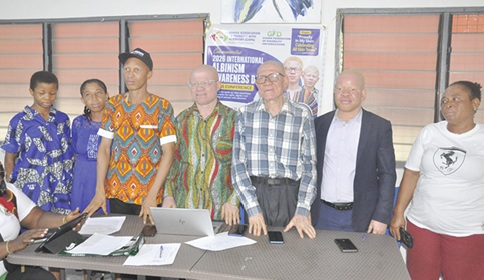
The Ghana Association of Persons with Albinism (GAPA) has called for sustained nationwide awareness campaigns to challenge harmful myths and stereotypes about albinism.
At a press conference in Ho last Friday, to mark the 2026 International Albinism Awareness Day, the Executive Director of GAPA, Newton Komla Katseku, said in Ghana, persons with albinism continue to face numerous challenges, including barriers to education, health care, employment, social participation and access to essential skin and eye care services.
The theme for the day was: "Proudly in My Skin, Celebrating All Skin Tones."
Mr Katseku said beyond the physical challenges associated with albinism, many individuals experienced social isolation, bullying, discrimination, anxiety, low self-esteem, and other psychosocial consequences arising from societal misconceptions and negative stereotypes.
Touching on the theme, Mr Katseku said it was particularly significant as it highlighted the psychological impact of colour-based discrimination on the enjoyment of human rights by persons with albinism.
He reaffirmed the association’s commitment to promoting the rights, dignity, safety, and inclusion of all persons with albinism in Ghana.
“We believe that every person, regardless of skin tone, deserves equal opportunities, respect, protection, and access to services that enable them to live healthy, productive and fulfilling lives,” he added.
Mr Katseku said the stigma, exclusion, violence, and denial of opportunities experienced by persons with albinism constituted forms of intersectional and colour-based discrimination.
In that regard, he said the association continues to promote the visibility, dignity, and voices of persons with albinism as full rights-holders and valued members of society.
Further, Mr Katseku said GAPA would mobilise governments, institutions, communities and development partners to address both the root causes and consequences of colour-based discrimination.
Climate change
On climate change, he said, the trend of rising temperatures and increased exposure to ultraviolet radiation disproportionately affected persons with albinism.
“We, therefore, urge the government and stakeholders to intensify efforts to combat climate change, promote environmental sustainability, and protect vulnerable populations from climate-related health risks.
Earlier, the Volta Regional President of the Ghana Federation of Disability Organisations, Elikplim Afua Klu, said there was still a need to intensify efforts to eliminate misconceptions and harmful stereotypes associated with albinism.
“Together, we must create safe environments where persons with albinism can thrive and contribute meaningfully to national development,” she maintained.
Ms Klu urged policymakers and stakeholders to strengthen measures that guarantee access to quality health care, inclusive education, social protection, employment opportunities and effective legal protection for persons with albinism.
