
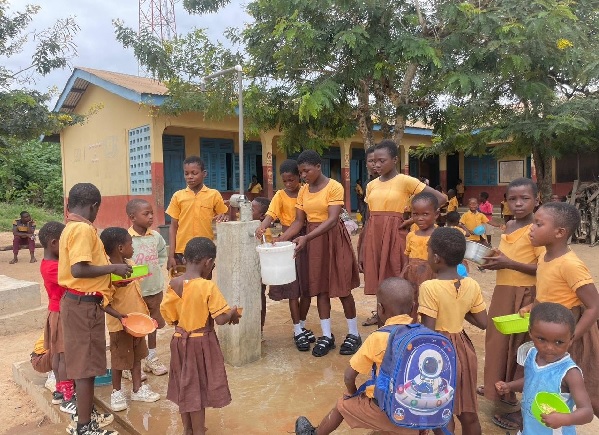
Communities in Kwakuri and Akorsahkrom in the Asutifi North District of the Ahafo Region are experiencing renewed relief following the commissioning of a new water, sanitation and hygiene (WASH) intervention aimed at addressing long-standing water challenges.
The initiative, implemented under the Ahafo Regional Integrated WASH Programme (ARIWP), is a collaboration between World Vision Ghana and Interplast Limited, and has already extended safe drinking water to more than 1,500 residents and over 800 schoolchildren.
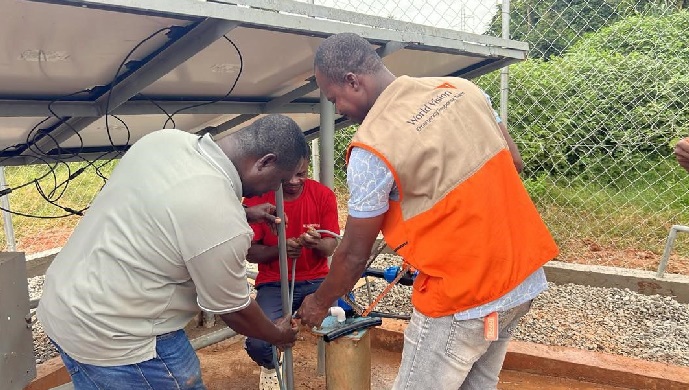
The project was made possible through a memorandum of understanding between the two organisations, under which Interplast supplied high-quality HDPE pipes and technical materials to support the construction and rehabilitation of water systems in underserved communities.
This facilitated the expansion of water infrastructure to areas that had for years depended on unsafe streams and distant sources.
Residents say the intervention has transformed daily life. In Akorsahkrom, a mother of three, Ama Serwaa, described the situation as life-changing, noting that families no longer need to wake up at dawn to fetch water from unsafe sources.
She added that access to clean water has improved household health and freed up time for productive activities.
“We used to wake up at dawn to fetch water from a stream that was not safe,” “Now the water is right here in the community. Our children are healthier, and we have more time for our work.”
Health workers in the area report early positive outcomes. Community health volunteer Kofi Mensah said cases of water-borne diseases, particularly diarrhoea among children, have begun to decline since the introduction of the new water systems. He described the project as a significant relief for the communities.
Since the water came, we’ve seen fewer cases of diarrhoea among children,” she said. “This project has brought real relief to our people.
In schools, teachers have also observed improvements. Adwoa Nyarko, a teacher at one of the beneficiary schools, said pupils no longer leave classrooms in search of water, leading to improved attendance and better hygiene practices among students.
District officials in Asutifi North have commended the initiative, describing it as a model for effective private sector collaboration in addressing critical development challenges, particularly in water and sanitation delivery.
The partners say the intervention forms part of broader efforts to expand equitable access to safe water and strengthen community resilience. They reaffirmed their commitment to scaling up similar projects in other underserved areas across the region.
The intervention is expected to be sustained through ongoing monitoring and maintenance support, with stakeholders emphasizing community ownership to ensure long-term functionality of the systems.
Local leaders have also called for continued investment in rural water infrastructure to eliminate dependence on unsafe sources and to support broader health, education, and economic outcomes across the district.
This reflects a shared commitment to sustainable development in the region.
