
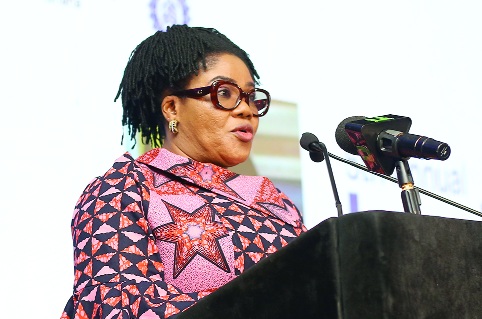
Sixty women have successfully graduated from the Female Future Programme Ghana (FFPGH).
They join 375 other women who have graduated from the programme since it started in 2019.
The graduates, made up of the 9th and 10th cohorts, have completed intensive leadership and boardroom competency training designed to prepare them for higher leadership and governance roles in both public and private institutions.
They graduated at the 5th Annual Leadership Conference of the Ghana Employers Association (GEA) in Accra last Thursday.
The conference was on the theme: “Leading from the Top: Executive Responsibility Beyond Strategy”.
FFPGH
The FFPGH is an initiative of the GEA meant to promote gender inclusion and strengthen female leadership representation in Ghana.
It is rolled out with support from the Confederation of Norwegian Enterprise (NHO).
Out of the programme’s 375 graduates, 43 have been appointed onto boards and committees, while the rest have either attained leadership positions or moved into higher management roles.
The graduates will also join the FFPGH Alumnae Network, which seeks to promote mentorship, networking and continuous professional development among graduates of the programme.
Speaking at the event, the Minister for Gender, Children and Social Protection, Dr Agnes Momo Lartey, emphasised the need for women to continue taking up leadership positions and contributing meaningfully to decision-making processes in the country.
She called on more organisations in the private sector to champion workplace inclusion and dismantle barriers that held women back.
“This administration sees women’s participation in leadership and decision-making as essential to national development.
It falls on women leaders today to lead with courage, competence, integrity, and compassion,” she said.
“Leadership inclusion must go beyond numbers. It must give women the skills, confidence, mentorship and institutional support they need to influence decisions and shape national transformation,” she stated.
Dr Lartey also praised the GEA for sustaining the programme, adding that the conference should deepen collaboration and produce concrete action for a more equitable Ghana.
She stressed that it had grown into one of the country’s most important interventions for women’s leadership, corporate inclusion and gender-responsive governance.
Celebrating growth
For his part, the President of the GEA, Dr Emmanuel Adu-Sarkodee Afriyie, said the conference had become an important platform for discussions on responsible leadership and women’s advancement in Ghana.
He said it had equipped women with leadership skills, mentorship and networking opportunities needed to thrive in leadership positions.
Dr Afriyie also commended employers and corporate partners for supporting women’s leadership development and investing in female talent.
