
An Education Consultant, Professor Simon-Peter Kafui Aheto, is calling for the criminalisation of the relationship between teachers and students to help address school-related sexual based violence.
According to him, criminalising the act would help stop such relationships in schools.
Prof. Aheto made the call when he made a presentation on “Scooping Studies on School-Related Gender Based Violence (SRGBV) Incident Response Mechanism in Ghana” to selected civil society organisations (CSOs) working in the area of gender-based violence.
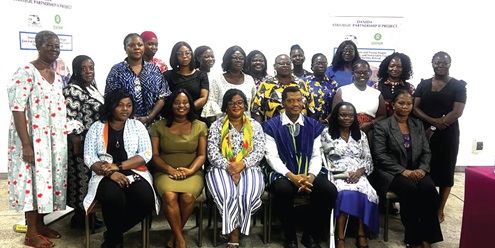
Organised by WILDAF in collaboration with Oxfam in Ghana under the Danish International Development Agency (DANIDA) Strategic Partnership Agreement (SPA II) Project, the meeting brought together about 30 CSOs.
The DANIDA SP II Project is a four-year initiative funded by DANIDA and implemented by a consortium led by Oxfam Netherlands/Oxfam in Ghana, in partnership with local organisations including WiLDAF Ghana.
The project seeks to promote a more equal, just, accountable, and peaceful country by advancing gender equality, climate justice, and inclusive development.
Presentation
Prof. Aheto, who joined the meeting virtually, in his presentation, said school-based sexual violence was on the increase, especially in junior and senior high schools, and the time had come for it to be curbed before it escalated.
He said such SRGBV occurred in classrooms, laboratories, dormitories and school compounds.
Others, he said, also happened online and in digital spaces as well as on the way to and from school.
He said inadequate policies and enforcement were fuelling the situation, adding that while policies against gender-based violence existed, their implementation remained inconsistent, with limited accountability for offenders.
He also said there was a lack of awareness and reporting mechanisms, where many victims were reluctant to report incidents due to fear of retaliation, stigma, or lack of support services.
Laws protecting learners
He said although the 1992 Constitution, the Children’s Act, 1998 (ACT 540) and the Education ACT, 2008 (ACT 778) are aimed at protecting learners, not much is heard about them.
Also, he said there were criminal laws such as the Criminal Offences ACT, 1960 (Act 29), the Domestic Violence Act, 2007 (Act 732) and the Human Trafficking Act, 2005 (Act 694) that apply to SRGBV, but the question is whether they were being applied to protect learners.
He said the Ghana Education Service (GES) Code of Conduct explicitly prohibits sexual relationships between teachers and students, as there was an inherent and unequal power relationship between teachers and students, as students were vulnerable by virtue of their age, dependency and institutional position.
Presenting a toolkit to help address the issue, Prof. Aheto said it served as a practical guide for teachers, school administrators, policymakers, and other stakeholders to identify, prevent and respond to SRGBV effectively.
The toolkit, he said, had the potential of helping in creating safe learning environments, raising awareness of gender-based violence and promoting gender equality in schools.
Project
WiLDAF Programme Manager, Lois Aduamoah-Addo, said a dedicated component of the project focuses on eliminating SRGBV, which she added was a priority issue as it disproportionately affected girls and marginalised learners and constituted a fundamental barrier to Ghana’s education and gender equality goals.
The Executive Director, WiLDAF Ghana, Melody Darkey, said the meeting was aimed at increasing the knowledge of CSOs and Women’s Rights Organisations (WROs) to help integrate SRGBV evidence into ongoing policy reform processes.
The meeting, she said, would help CSOs and WROs to agree on a collaborative work plan for SRGBV reform, providing a clear road map for immediate next steps and shared accountability.
Writer’s email:
