
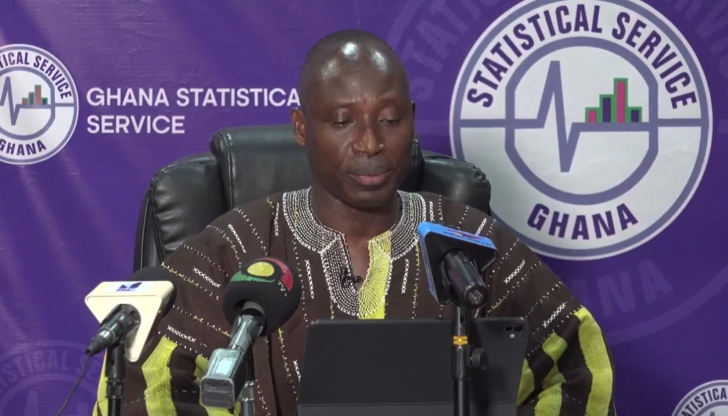
Informal cross-border trade between Ghana and its three land neighbours reached GH¢31 billion in the first three quarters of 2025, surpassing formal trade, according to a new report released by the Ghana Statistical Service (GSS).
The Informal Cross-Border Trade report, which provides the first continuous measurement of informal trade flows, found that informal trade was about one and a half times the value of formal trade with Togo, Burkina Faso and Côte d'Ivoire, which stood at GH¢20.1 billion over the same period.
The survey tracked informal trade across 206 active border points in 10 of Ghana's 16 regions between October 2024 and September 2025, through direct observation of goods crossing and face-to-face interviews with traders. Data was collected for 14 days each month between 6:00 am and 6:00 pm.
Government Statistician Dr Alhassan Iddrisu emphasised the significance of the findings, stating: "You cannot plan for what you cannot measure, and you cannot protect what you cannot see. Measuring informal cross border trade is the first step towards understanding its contribution to Ghana's economy and ensuring that the evidence informs policy. Every trader counts, and every trade should be counted".
The findings show that informal trade remains the principal channel of trade with Ghana's neighbouring countries. It accounted for more than two-thirds of total trade with Togo, about two-thirds with Côte d'Ivoire, and about half with Burkina Faso. Ghana recorded trade surpluses with Burkina Faso and Côte d'Ivoire throughout the period, although the overall trade surplus narrowed sharply from GH¢665.3 million in the second quarter to GH¢49.3 million in the third quarter due to a widening trade deficit with Togo.
Food products accounted for 49.4 per cent of informal imports by the third quarter of 2025, with cooking oil remaining the largest food import by value. Livestock was imported mainly from Burkina Faso, while vegetables and oil seeds entered largely through Togo . Ghana's informal food trade deficit doubled from about GH¢400 million in the first quarter to about GH¢800 million in the third quarter.
The Upper East Region recorded the highest value of informal exports, while the Volta Region recorded the highest value of informal imports. Paga remained the busiest entry point for imported goods. Men accounted for about 70 per cent of transporters of exported goods, while women accounted for more than 60 per cent of transporters of imported goods. Most goods were transported by tricycles and motorbikes, reflecting the nature of informal trade along Ghana's land borders.
The report recommends simplifying registration and licensing for small traders, improving access to finance and training, investing in border infrastructure and data systems, strengthening cooperation with neighbouring countries, and expanding domestic production of key imported commodities.
