
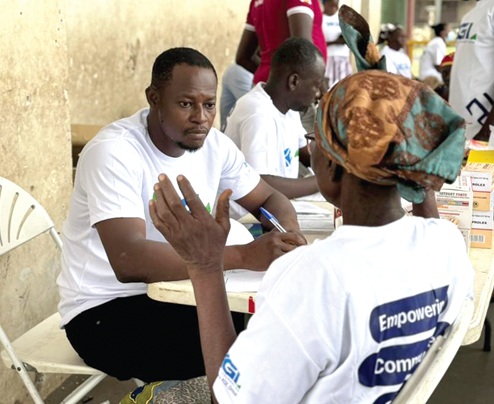
The KGL Foundation has organised a free health screening exercise for residents of the Bolgatanga Municipality, underscoring the importance of regular health checks and knowing one's health status, irrespective of cost.
For many of the residents, it was their first time undergoing several of the tests on offer, as the high cost of routine medical check-ups has kept healthcare beyond the reach of many ordinary Ghanaians.
Despite the rain, residents turned out in their numbers, queuing to be attended to, determined not to let the weather deny them the opportunity to know their health status.
The turnout underscored not just the community's hunger for accessible health care but the foundation's unwavering commitment to a healthy Ghanaian populace, irrespective of who they are or where they find themselves.
Health screening
The screening covered a wide range of health conditions, including Hepatitis B and C, HIV, malaria, blood sugar levels, blood pressure and basic health assessments.
Importantly, the exercise also included mental health screening, an often-neglected dimension of wellbeing that is seldom integrated into community health outreach programmes.
A blood donation drive rounded up the programme.
Early detection
The Programmes Manager, Nii Ankonu Annorbah-Sarpei, said: “A lot of Ghanaians don't really pay much attention to their health, so this initiative will help people to know their health status."
He stressed that knowing one's health status was the first and most important step toward preventing complications and that early detection, not emergency treatment, was where lives were truly saved.
Mr Annorbah-Sarpei said healthy mothers and children were not just family concerns but national assets, adding that their health was inseparable from social and economic progress and that any serious conversation about development must start from that point.
A Public Health Nurse, Rosemary Akolbire, expressed concern about the quiet epidemic of non-communicable diseases spreading through communities undetected.
"Of late, we have other non-communicable diseases that people are moving around with without knowing," she said, adding that free community interventions such as this one were essential for bridging the healthcare access gap, especially for vulnerable groups and low-income families.
She said hypertension, diabetes, hepatitis, HIV and mental health conditions do not discriminate by income, but access to diagnosis does, and such health screening could help bridge the gap.
Beneficiaries
For one of the beneficiaries, Abubakar Zakaria, the exercise was more than timely.
"Many people have never undergone some of these tests before due to cost barriers," he said, speaking for a significant number of those who showed up for the screening.
He said others left with something perhaps equally valuable — a renewed awareness of personal health management and what it actually meant to be proactive about one's wellbeing.
Other beneficiaries called for organisations to emulate the KGL Foundation’s example and show up for communities and engage in health advocacy for underserved areas.
