
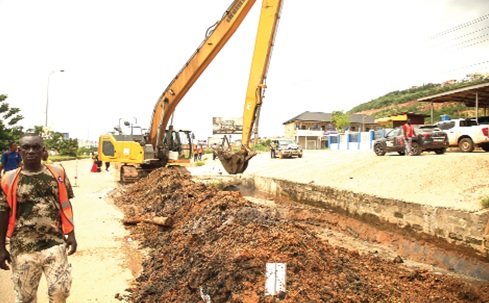
Dredge Masters Ghana Limited (DML), a private dredging company, has begun desilting drains along the Tuba Junction Tollbooth to the SCC Junction stretch, which has been at the centre of severe traffic congestion over the years following the accumulation of silt on sections of the highway after heavy rains.
The intervention is aimed at clearing blocked drainage channels and removing silt deposits from the road to restore the free flow of water through the drains to prevent further disruption to traffic along the very busy Kasoa-Accra corridor.
The exercise formed part of a corporate social responsibility initiative involving DML, Zoomlion Ghana Limited, FeDems, a private engineering consulting firm, and the Weija-Gbawe Municipal Assembly.
The desilting exercise covers the stretch from the Tuba Tollbooth area through to the West Hills Mall enclave, where recent rainfall washed large quantities of mud and debris onto portions of the road.
The deposits have affected vehicular movement by reducing the available carriageway to a single lane, making it difficult for motorists to navigate.
The situation has led to long queues and extended travel times for commuters using the route.
When the Daily Graphic visited the area last Friday, heavy equipment, including excavators, wheel loaders, and tipper trucks, had been deployed to remove the accumulated silt and clear choked drains along the affected sections.
The exercise also involved the dredging of drainage channels and silt-trapping pits, which had become heavily clogged, preventing the smooth movement of stormwater during rainfall.
Intervention
The Overseeing Engineer for the project, Bernard Amoo, told the Daily Graphic that the intervention was necessary to improve drainage efficiency, reduce flooding and protect the road network from further deterioration.
Mr Amoo said some major drainage structures within the area had become filled with silt over time, causing rainwater mixed with debris to spill onto the highway whenever there was heavy rainfall.
He, therefore, added that the exercise, which began last Thursday, would continue until the drains were clear of silt and other foreign materials.
The engineer indicated that the participating organisations decided to undertake the exercise voluntarily to complement the government’s efforts in addressing flooding challenges and improving conditions along the highway.
He said sections of the road were being opened intermittently as the work progressed to allow vehicles to pass while ensuring that the desilting exercise continued safely.
Mr Amoo expressed optimism that continued removal of silt and improvement of drainage systems would help reduce the impact of future rains on traffic movement along the corridor.
He, however, called for regular maintenance of drains, silt traps and catchment areas, particularly during the rainy season, to prevent similar situations from recurring.
Despite the progress made, some parts of the road between SCC Junction, the Old Barrier, all the way to Mallam junction remained affected with uneven road surfaces and visible pools of water still on some sections of the stretch.
Situation
Meanwhile, motorists and commuters who continue to endure the heavy congestion on the Kasoa-Accra highway called for long-term measures to address the persistent traffic challenges on the route.
While welcoming the ongoing desilting exercise, some affected road users stressed that a lasting solution was needed to prevent the highway from experiencing similar disruptions during future rains.
They appealed to the relevant authorities to improve drainage infrastructure, ensure regular maintenance of the road and accelerate the development of alternative routes to reduce pressure on the highway.
Many commuters described the situation as stressful and frustrating, recounting how journeys that normally took less than an hour extended to more than four hours due to the gridlock.
A station master at the Tuba Taxi Rank, Mutala Quartey, said the poor road network had affected the trade of the taxi drivers in the area, a situation which, he said, had been worsened by the flooding on the roads.
“About 200 taxis are operating in this area, but the poor roads have damaged a lot of the cars. Now, we have less than 30 operating at this station,” he said.
He added that this situation occurred every year; however, there had been no lasting solution to the problems.
