
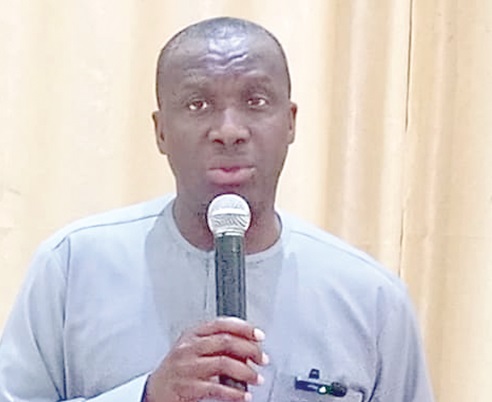
The Births and Deaths Registry is set to undertake mobile registration in hard-to-reach communities across the country to ensure that every newborn child is legally identified and issued a birth certificate.
The acting Registrar of Births and Deaths, Samuel Adom Botchway, indicated that the mobile registration programme would seek to reach out to about 600,000 households in communities where access to registration centres remained a challenge.
That, he said, would improve birth registration coverage and ensure that children living in remote and underserved areas were not excluded from essential legal documentation and government services.
“We are trying to deploy a mobile registration programme to these hard-to-reach communities because it is very important to make sure that every child born in those areas is registered.
We can see that because these children are born in hard-to-reach communities, many of them are left unregistered,” Mr Botchway said.
Capacity building
The acting Registrar of Births and Deaths was speaking at a capacity-building training workshop for staff of the registry and officials of the Ghana Health Service (GHS) from various districts in the Upper East and North East regions.
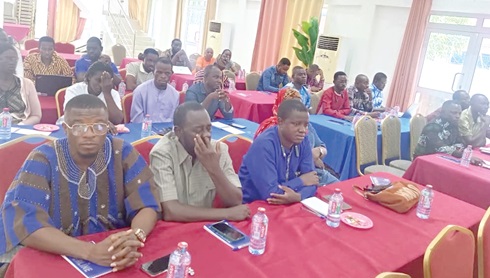
The participants
The event sought to build the capacity of participants to increase birth and death registration rates in the participating regions and across the country.
The training, which was organised by the registry in collaboration with the International Centre for Migration Policy Development, formed part of Phase II of the Free Movement of Persons and Migration in West Africa Programme.
The programme is funded by the European Union and the Ministry of Foreign Affairs of Denmark, and implemented by the International Organisation for Migration, the International Labour Organisation and the International Centre for Migration Policy Development.
Bridging gap
Mr Botchway emphasised that the exercise would help to bridge existing registration gaps in the deprived areas.
He said obtaining a birth certificate was a fundamental right of every child, and served as the first official recognition of a person's existence by the state, adding that without proper registration, children might face difficulties proving their age, nationality and identity later in life.
Mr Botchway indicated that the Oti, Bono, Ahafo, North East, Upper East and Upper West regions continued to record low registration rates largely due to accessibility challenges.
Free movement
For her part, the Project Manager and Head of Office of the International Centre for Migration Policy Development in Ghana, Amala Obiokoye-Nwalor, said West Africa had long been recognised for the free movement of people within the ECOWAS sub-region without visa requirements.
She explained, however, that free movement did not eliminate the need for identity documentation.
“People still need identity documents because governments need to know who is entering and leaving their countries,” she said.
Mrs Obiokoye-Nwalor consequently admonished parents and guardians to ensure that their children were registered at birth.
