
Up to 80 per cent of children in Ghana aged up to four years are poor and continue to face significant deprivation due to inadequate public investment and support, despite being the most vulnerable age group, according to a UNICEF Report on the Situation Analysis of Children and Adolescents in Ghana.
The analysis found that children in their earliest years experienced the highest levels of multidimensional poverty, underscoring the need for greater investment in nutrition, health care, early childhood education, and child protection.
The report conducted by the National Development Planning Commission (NDPC) and partners, with funding from UNICEF, emphasised that nearly three out of every four children in Ghana face multiple forms of deprivation, while 97.5 per cent are deprived in at least one essential service.
It said children under five were the most vulnerable, with 80 per cent experiencing multidimensional poverty, pointing to the need for stronger investments in early childhood development.
It revealed that while Ghana has made progress in expanding access to services, public spending remains below international benchmarks, particularly in health, education and social protection.
The findings suggested that prioritising early childhood development remained critical to improving long-term outcomes and reducing poverty and inequality across generations.
Event
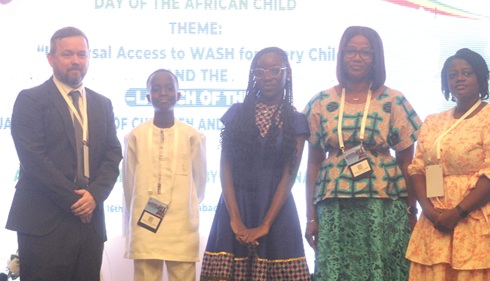
The revelation was made at an event organised by UNICEF, in collaboration with the Ministry of Gender, Children and Social Protection (MoGCSP), to commemorate the 2026 Day of the African Child in Accra last Monday.
Observed annually on June 16, the Day of the African Child honours the memory of the 1976 Soweto Uprising in South Africa, during which thousands of students protested against poor-quality education and unequal learning opportunities.
This year's celebration was on: "Universal Access to Water, Sanitation and Hygiene (WASH) for Every Child", highlighting the importance of ensuring that children and young people across Africa have access to essential health and sanitation services.
The event also marked the launch of two UNICEF-supported reports, namely Situation Analysis of Children and Adolescents in Ghana and Assessing Public Spending by Age in Ghana.
Among the dignitaries in attendance were UNICEF acting Representative, Pauline Sarvilahti; Deputy Minister of Local Government, Chieftaincy and Religious Affairs and Member of Parliament for La Dadekotopon, Rita Naa Odoley Sowah; Director of the Learning for Well-being Institute, Dominic Richardson; acting Chief Director of MoGCSP, Ebenezer Charway, and Policy Advisor at the Office of the Vice-President, Miriam Iddrisu.
Child deprivation
Speaking on the Situation Analysis of Children and Adolescents in Ghana, NDPC Principal Analyst, Nii Odoi Odotei, highlighted alarming levels of child deprivation in Ghana.
Citing the 2020 Multidimensional Child Poverty Report, he revealed that 73 per cent of Ghanaian children were multidimensionally poor, meaning they experienced deprivation in at least three critical areas.
Mr Odotei mentioned that although Ghana had made progress in areas such as skilled birth attendance, primary school enrolment, and child protection laws, major challenges persisted.
The analysis called for increased investment in children — particularly in their earliest years — arguing that improving nutrition, health care, education and protection services would yield significant long-term social and economic returns while helping to break cycles of poverty and inequality.
Child-focused policies
The UNICEF acting Representative, praised the government of Ghana for leading a comprehensive, evidence-based assessment of children's well-being and development.
She highlighted the collaborative process involving the Ministry of Gender, Children and Social Protection, the NDPC, the Ghana Statistical Service (GSS), and other state institutions, indicating that the analysis was informed by data, technical expertise, community consultations and children's voices.
Ms Sarvilahti emphasised the importance of a life-cycle approach to child development, arguing that investments must address multiple aspects of a child's well-being at different stages of life rather than focusing on a single sector.
Strategic investment
The acting Chief Director of the Gender Ministry called for greater and more strategic investment in children, stressing that child-focused spending should be viewed as a national development priority rather than a social cost.
Mr Charway highlighted the importance of ensuring universal access to water, sanitation and hygiene, describing it as a fundamental child rights issue linked to health, education, nutrition, protection and inclusion.
He mentioned that although Ghana had made significant progress in advancing children's rights since becoming the first country to ratify the United Nations Convention on the Rights of the Child in 1990, many children continued to face challenges, including multidimensional poverty, learning deficits, unequal access to quality services, child protection concerns and regional disparities.
He said the report served as a call to action for the government, development partners, civil society and communities to address persistent inequalities and emerging threats such as climate change, urbanisation, economic pressures and digital risks.
