
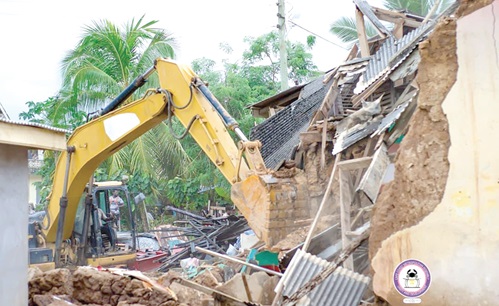
A total of 155 dilapidated structures across the Central Region have been earmarked for demolition following last weekend's devastating floods and collapsed buildings that claimed 18 lives and displaced hundreds of residents.
The Central Regional Director of the National Disaster Management Organisation (NADMO), Emmanuel Kwesi Dawood Mensah, disclosed that the affected buildings have been identified as structurally unsafe and pose serious threats to lives and property, particularly as the rainy season intensified.
According to him, 50 of the buildings were located within the Cape Coast metropolis, making it the district with the highest number of structures marked for demolition.
He revealed that NADMO had already supervised the demolition of 27 dangerous structures across the region, including seven in Cape Coast, seven in Kasoa and 13 in other districts.
The move follows days of torrential rainfall that triggered widespread flooding, landslides, mudslides and ruined buildings across several parts of the region, leaving a trail of destruction.
Deaths
The disaster resulted in 18 deaths, while property worth thousands of cedis was destroyed. In all, about 60 buildings, many of them century-old swish and brick structures, collapsed during the rains.
He noted that the ruined building incidents had left 377 people internally displaced and forced many affected families to seek shelter with relatives, friends, churches and traditional authorities.
Mr Mensah said many affected families were still assessing their losses and looking forward to receiving relief support.
He indicated that NADMO was working closely with the various Metropolitan, Municipal and District Assemblies (MMDAs) to support victims and help them recover from the disaster.
"We are fully prepared by way of early warning systems, rescue operations, evacuations and other emergency interventions to minimise future risks," he said.
Cape Coast response
In Cape Coast, authorities have intensified efforts to prevent further tragedies as residents gradually return to normal life after the disaster.
The Cape Coast Metropolitan Chief Executive, George Justice Arthur, last Monday night led a demolition exercise in parts of the metropolis as part of measures to safeguard lives and property.
The exercise formed part of the assembly's response to the recent floods and collapsed buildings that claimed four lives within the metropolis.
In a statement, the Cape Coast Metropolitan Assembly said it was determined to address the underlying causes of flooding and would take immediate steps to remove dangerous structures that could pose future threats.
The assembly also announced plans to design and construct a comprehensive drainage system to improve stormwater management across the city.
Additionally, it intends to demolish buildings located on watercourses, storm drains, road reservations, and structures erected without the required permits.
As part of the exercise, eight unsafe buildings were pulled down at Gyegyeano on Monday night. The community was among the hardest-hit areas, as it recorded two deaths from collapsed buildings during the floods.
Call for cooperation
The Assembly Member for the Gyegyeano Electoral Area, Baidoo Acquah, said he had previously proposed a demolition exercise in the area, but residents opposed the move.
According to him, the recent tragedy highlighted the need for communities to support such preventive measures.
He, therefore, urged residents to cooperate with authorities whenever safety interventions were proposed to help protect lives and property.
Some residents have since welcomed the demolition exercise.
One resident, Jennifer Soko, described the action as a step in the right direction but appealed to authorities to assist affected families with alternative accommodation.
"We support the exercise because it is meant to save lives, but many people have nowhere to go.
We hope the government and the assembly will help those who have been displaced," she said.
Meanwhile, residents across affected communities continue with the clean-up and recovery efforts as authorities maintain that proactive measures remain critical to preventing a recurrence of the devastating incidents during last week's rains.
