
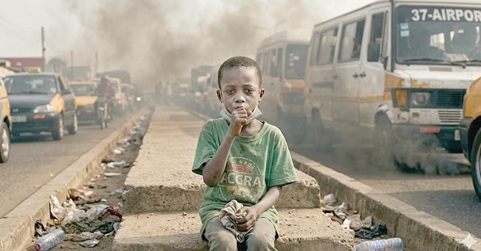
Air pollution is now the country's second-leading risk factor for death after high blood pressure – yet no national policy exists to manage vehicle emissions, as ageing fleet kills thousands annually.
Vehicle pollution has become a leading risk factor for death in Ghana, affecting both children and the working class.
Data from the World Health Organisation (WHO), UNICEF, and the State of Global Air report confirm that air pollution is now the country's second-leading risk factor for death after high blood pressure.
Vehicle pollution has been identified as a major contributor to deteriorating air quality, particularly in urban centres.
Annual estimates
According to estimates by the Environmental Protection Agency (EPA), Particulate Matter Pollution (PM2.5) contributes to approximately 2,800 deaths annually within the Greater Accra Metropolitan Area alone.
Vehicles operating on heavily congested roads have been identified as the primary source of PM2.5 pollution in the capital.
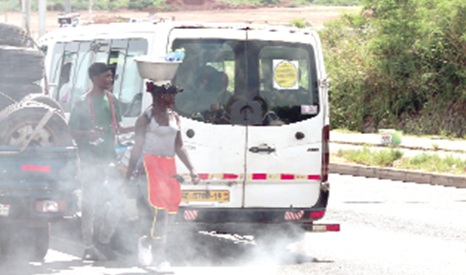
A bus emitting exhaust fumes, polluting the environment and posing a health hazard to street hawkers
Nationally, air pollution is estimated to cause between 28,000 and 32,000 deaths each year, representing about 14 percent of all deaths in Ghana.
Health experts warn that exposure to vehicle-related air pollution contributes significantly to major Non-Communicable Diseases and respiratory illnesses.
Studies show that air pollution is linked to 39 percent of stroke-related deaths, 33 percent of chronic heart disease deaths, 33 percent of lung cancer deaths, 66 percent of Chronic Obstructive Pulmonary Disease (COPD) deaths, 33 percent of lower respiratory infection deaths, and 33 percent of neonatal deaths.
The impact on children has also been severe. Reports indicate that approximately 5,900 children under the age of 20 died from air pollution-related causes in 2023.
Authorities attribute much of the problem to Ghana's ageing vehicle fleet.
The transport sector had an estimated 3.2 million vehicles as of 2022, with more than 95 percent classified as old and highly polluting.
Diesel pollution, which is common among many imported vehicles, has been classified as carcinogenic and is known to increase the risk of lung cancer.
Ghana is a signatory to broader climate and environmental commitments.
Following the adoption of the Paris Agreement in 2015, Ghana has yet to fully intensify its efforts to integrate climate action into national development planning.
The country's National Climate Change Policy, adopted in 2013, seeks to build a climate-resilient and climate-compatible economy while promoting sustainable development through low-carbon growth strategies; however, measures to implement low-carbon vehicles are yet to be rolled out across the country.
At the moment there is no policy on how the country intends to manage vehicle pollution, although there are standards set by the EPA and Ghana Standards Authority on approved particles from each vehicle.
The DVLA and EPA are yet to provide data on how they intend to manage vehicle pollution across the country.
They also are yet to provide any comments on how such a leading death risk factor is being managed as it is killing both the working class and our children.
A Crisis We Can No Longer Afford to Ignore
The data is unambiguous: vehicle pollution has silently become one of Ghana's most lethal threats, killing more people annually than malaria, road traffic accidents, or even HIV/AIDS—yet it receives a fraction of the public attention or political urgency.
With an estimated 28,000 to 32,000 deaths each year, air pollution now sits just behind high blood pressure as the nation's second-leading risk factor for premature death.
Worse still, the victims are not distant statistics: they are children developing asthma before age ten, working-class adults inhaling toxic fumes on their daily commute, and elderly citizens whose chronic diseases are being accelerated by every breath of polluted urban air.
The fact that over 95 per cent of Ghana's 3.2 million vehicles are old and highly polluting is not an act of nature—it is a policy failure sustained over decades.
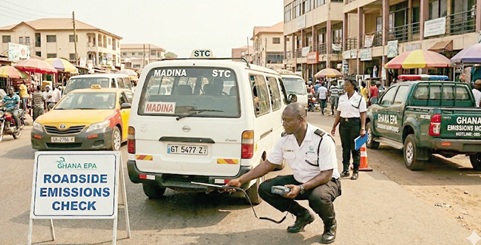
Regular tests by relevant authorities such as these are necessary to stop the pollution caused by vehicles and the resultant deaths
The health burden alone should have triggered an emergency response years ago.
Instead, Ghana has watched as PM2.5 pollution in Greater Accra alone claims 2,800 lives annually, while nationally, air pollution contributes to 39 percent of stroke deaths, 66 percent of COPD deaths, and thousands of neonatal deaths.
The economic cost, estimated at $2.5 billion per year by the World Bank, is money drained from productivity, healthcare systems, and family incomes.
Yet until very recently, the country had no enforceable policy to manage vehicle emissions, no mandatory testing regime, and no clear roadmap for transitioning away from its ageing, diesel-heavy fleet. That silence has been lethal.
Encouragingly, the tide may finally be turning—but only just.
The Environmental Protection Agency's new Air Quality Management Regulations (L.I. 2507) and the DVLA's planned nationwide vehicle emission testing programme signal a long-overdue acknowledgment of the crisis.
The National Electric Vehicle Policy, with its tax waivers on EV imports and a target to phase out new petrol and diesel vehicle sales by 2070, offers a distant but necessary vision.
However, these measures remain fragile and incomplete.
The recent repeal of the carbon emissions levy removed a key financial incentive for polluters, and enforcement capacity on the ground is still minimal.
Without swift, well-funded implementation and public awareness campaigns to match the scale of the problem, these policies risk becoming another set of well-intentioned but ineffective documents.
Ghana has a choice to make. It can continue treating vehicle pollution as an unavoidable side effect of urban life, sacrificing the lungs and lives of its citizens for the convenience of an ageing, toxic fleet.
Or it can treat this crisis with the seriousness it deserves: by accelerating the roll-out of emission testing, investing aggressively in public transport and clean vehicle imports, and holding polluters accountable. The working class cannot afford to wait.
The nearly six thousand children who died from air pollution in 2023 had no voice in this debate—but their deaths are a verdict on adult inaction.
The question is not whether Ghana will act, but how many more will die before it does.
Thee writer is an environmentalist and clean air advocate
