
The Ministry of Tourism, Culture and Creative Arts has reaffirmed its commitment to transforming Ghana's tourism, culture and creative arts sector into a major driver of economic growth, job creation and national development.
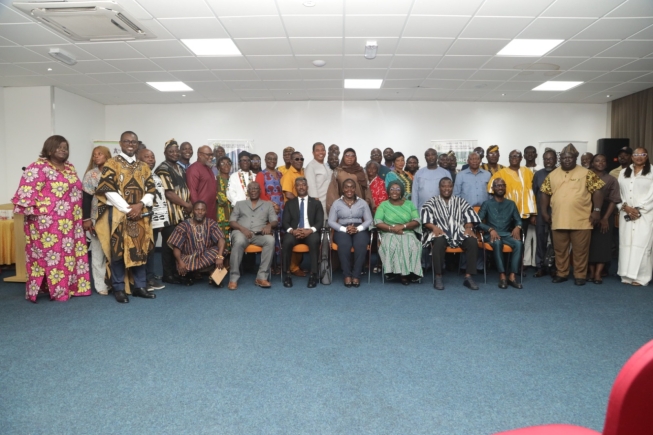
The commitment was made during a High-Level Stakeholder Consultative Meeting held at the Accra City Hotel, which brought together government officials, heads of agencies, private sector operators and key players in the tourism industry to deliberate on strategies to accelerate the growth and competitiveness of Ghana's tourism sector.
Delivering remarks on behalf of President John Dramani Mahama, the Chief of Staff, Julius Debrah, called for stronger collaboration between government and industry stakeholders to unlock the full potential of the tourism sector. He emphasised the need for innovation and effective storytelling in promoting Ghana as a preferred tourism destination, noting that successful tourism destinations are built around compelling narratives that attract visitors.
"If you don't tell a story very well, no one knows. Innovation must lead our tourism agenda if we are to capture the attention of potential tourists and grow visitor inflows," Debrah reiterated.
He encouraged stakeholders to develop creative and market-driven tourism products while working closely with government institutions to enhance Ghana's visibility on the global tourism landscape.
The Minister for Tourism, Culture and Creative Arts, Abla Dzifa Gomashie, in her opening statement, underscored the Ministry's commitment to transforming the sector into a major pillar of national development through its "domestic-first, global-next" strategy, which seeks to strengthen domestic tourism and cultural participation as the foundation for international growth.
Gomashie highlighted key achievements, including the launch of the Ghana National Cultural Policy, the UNESCO Culture|2030 Indicators Programme, and the development of Ghana's first Tourism Satellite Account, while emphasising efforts to preserve Ghana's cultural heritage following the inscription of Highlife music, dance and Kente on UNESCO's Representative List of the Intangible Cultural Heritage of Humanity.
The Minister also highlighted key tourism innovation initiatives, including the Afro Gastro Festival, National Photo Competition, Ghana Tourism Marketplace, Ghana Tourism Investment Platform and Akwaaba Night, while calling for private sector investment in tourism training and skills development. She further announced Ghana's successful bid to host the 70th Session of the UN Tourism Commission for Africa in 2027, coinciding with the country's 70th Independence Anniversary celebrations.
Adding her voice to discussions on the role of the private sector in national development, the Technical Advisor to the Ghana Revenue Authority, Elsie Appau-Klu Esq., emphasised the role of taxation in national development and called for improved tax compliance. She highlighted recent tax reforms aimed at easing the business environment and encouraged small businesses to utilise the modified taxation scheme to support growth and job creation.
The meeting concluded with a stakeholder dialogue session, where participants shared ideas on improving tourism infrastructure, strengthening marketing strategies, enhancing heritage conservation and promoting greater collaboration between government and industry players.
