
The Childhood Cancer Society of Ghana (CCSG) has called on the government to make childhood cancer a national priority by investing in early diagnosis, equitable access to treatment and sustainable financing to improve survival among affected children.
The Vice Chair of the Society, Professor Vivian Paintsil, who made the appeal, explained that the condition remained highly treatable when the right measures were put in place.
“Ghana currently records less than 50 per cent survival for childhood cancer patients, compared to between 85 and 90 per cent in high-income countries.
The country could exceed the World Health Organisation’s (WHO) target of 60 per cent survival if children were diagnosed early and received timely treatment,” she added.
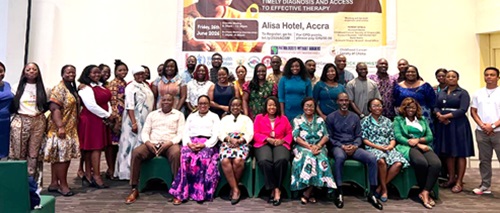
Prof. Paintsil was speaking at the CCSG’s 2026 Annual General and Scientific Meeting in Accra last Friday on the theme: “Towards the WHO GICC 60 per cent Survival: Timely Diagnosis and Access to Effective Therapy.”
Investment
Prof. Paintsil, who is the Head of the Paediatric Oncology Unit at the Komfo Anokye Teaching Hospital (KATH), said childhood cancer should be regarded as an investment in the country’s future because many affected children could survive and live productive lives with prompt intervention.
She explained that inadequate specialists, including paediatric oncologists, radiologists, radiation oncologists and pathologists, continued to limit access to quality care, forcing many families to travel long distances for treatment.
She further cited the high cost of treatment as a major obstacle for families and urged the government to ensure that support from the Ghana Medical Trust Fund benefits every child diagnosed with cancer.
Prof. Paintsil maintained that childhood cancers were highly treatable if detected early, urging parents to seek immediate medical attention whenever children developed warning signs such as persistent fever, unexplained weight loss, unusual lumps, white spots in the eye, prolonged bone pain, persistent morning vomiting, severe headaches or changes in walking pattern.
Collaborative efforts
The President of the Paediatric Society of Ghana (PSG), Dr Hilda Boye, said improving childhood cancer outcomes required stronger collaboration among clinicians, nurses, radiologists, pharmacists, pathologists, policy makers, development partners and families.
She urged stakeholders to place the experiences of parents and survivors at the centre of decision-making, while ensuring equitable access to quality care for children, particularly those living outside specialist centres.
The Country Coordinator for World Child Cancer (WCC), Adwoa Pinamang Boateng-Desu, said the country diagnosed only about one-third of the estimated 1,500 to 2,000 childhood cancer cases expected annually.
She enumerated the organisation’s investments in healthcare worker training, public awareness, treatment guidelines, psychosocial support and specialist training, while calling for expanded NHIS coverage, a national childhood cancer registry and stronger partnerships.
Progress, policy
A Technical Officer at the WHO Country Office, Dr Angela Ackon, said the country had made significant progress towards implementing the Global Platform for Access to Childhood Cancer Medicines after joining the initiative in 2025.
She said the country’s readiness had reached 77 per cent and urged faster implementation of outstanding requirements to enable Ghana to receive the first shipment of quality-assured childhood cancer medicines later this year.
The Technical Coordinator at the Ministry of Health, Dr Mavis Sakyi, said the ministry was aligning childhood cancer care with universal health coverage, the National Health Insurance Scheme and the Ghana Medical Trust Fund to reduce financial barriers.
