
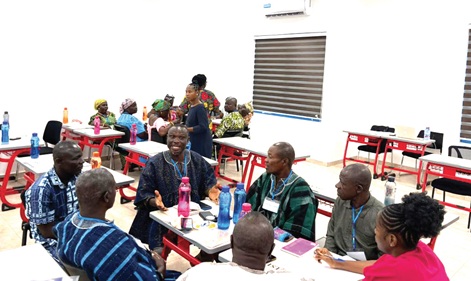
Fisherfolk from major coastal communities in the Central Region have been educated on Ghana’s newly enacted Fisheries and Aquaculture Act, 2025 (Act 1146), in a move aimed at strengthening compliance, promoting sustainable fishing practices and safeguarding the country’s marine resources for future generations.
The three-day training programme was a collaboration between the University of Cape Coast, Blue Ventures and the Fisheries Commission.
The event brought together chief fishermen, fish processors and fisheries stakeholders from Komenda, Elmina, Cape Coast, Abandze, Anomabo and Nakwa.
The participants were equipped with knowledge on key provisions of the new law and were expected to serve as trainers within their respective fishing communities.
The workshop focused on changes introduced under the new legislation, including revised fishing boundaries for artisanal canoe operators, regulations affecting fish processors and measures to address illegal fishing activities that continued to threaten fish stocks across the country.
Training
Speaking at the programme, a professor of fisheries and aquatic sciences, UCC, and facilitator, Prof. Joseph Aggrey-Fynn, explained that the training was necessary because the new law contained several changes that stakeholders needed to understand before its full implementation.
He said the Fisheries and Aquaculture Act, 2025, was enacted to replace the Fisheries Act of 2002 and respond to emerging challenges confronting the sector.
IUU
According to him, illegal fishing practices such as light fishing, the use of explosives, carbide and other harmful chemicals continued to deplete fish stocks and endanger marine ecosystems.
Prof. Aggrey-Fynn stressed that the government has the responsibility to protect the country’s fisheries resources, warning that continued destruction of the marine environment could threaten livelihoods, food security and future generations.
He noted that the law also empowers the government to introduce management measures such as closed seasons to help restore declining fish stocks.
He further explained that draft regulations guiding the implementation of the Act were being developed through consultations with stakeholders, including fishing communities, before final approval.
A participant, William Duncan, who represented the Canoe and Fishing Gear Owners Association of Ghana (CaFGOAG), described the training as timely and impactful, saying it would help industry players better understand their responsibilities under the new law.
He called for strict enforcement of fisheries regulations and greater adherence to sustainable fishing practices, while appealing for government support packages during closed seasons to cushion fisherfolk.
Implementation
Also speaking at the workshop, the Secretary of the National Fish Processors and Traders Association (NAFPTA), Mary Addisson, said effective implementation of the law would particularly benefit women in the fisheries value chain.
She explained that curbing the use of harmful chemicals in fishing would improve fish quality, protect public health and strengthen the work of women engaged in fish processing and trading.
Mrs Addisson expressed optimism that the new legal regime would promote a healthier and more sustainable fisheries sector.
At the end of the training, each participant was presented with a certificate of participation in recognition of their completion of the programme.
