
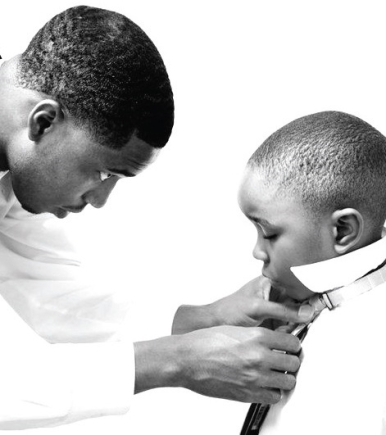
As Ghana joins the rest of the world in celebrating Father’s Day, families will honour the men who have guided, protected, nurtured and sacrificed for them.
Yet this year’s celebration has coincided with vigorous public conversations about paternity, DNA testing and stories of men discovering that children they have raised are not biologically theirs.
These discussions have generated strong emotions and competing opinions.
Amid the noise, however, Father’s Day presents an opportunity to ask a deeper question: What exactly are we celebrating when we celebrate fathers?
Are we celebrating biology alone, or are we celebrating something richer and more enduring?
The pain behind the paternity debate
Any meaningful discussion of fatherhood must acknowledge the pain that has fuelled recent public debates.
For many men, discovering that a child they have loved, supported and raised is not biologically theirs can be profoundly distressing.
Such revelations may evoke feelings of betrayal, grief, anger and loss.
Trust, once broken, can leave lasting emotional scars.
These experiences should neither be minimised nor dismissed.
Every person deserves honesty in relationships and the right to know the truth about their biological connections.
Yet while paternity addresses an important biological reality, fatherhood encompasses dimensions that extend beyond genetics.
A story that redefined fatherhood
Many years ago, a case that came through a university counselling centre offered a powerful lesson on the distinction between paternity and fatherhood.
A young woman, then a student at a university, sought counselling because she had become increasingly distressed by a series of notes appearing in her pigeonhole.
The notes were from a man who repeatedly claimed to be her father.
The messages unsettled her because they challenged a reality she had always taken for granted.
Seeking answers, she approached her mother, who appeared anxious and reluctant to discuss the matter.
Sensing that something significant was being withheld, the young woman became even more troubled.
Eventually, a meeting was convened between the mother, daughter and psychologist.
During that conversation, the mother disclosed a secret she had carried for years.
As a university student, she had become pregnant.
The biological father denied responsibility for the pregnancy and distanced himself from her.
At a time of uncertainty and vulnerability, another young man, a close friend who knew her circumstances well, stepped forward.
He accepted responsibility, married her and raised the child as his own.
Years later, the man who had denied the pregnancy had resurfaced and was now seeking recognition as the biological father.
The mother feared that the revelation would shatter her daughter’s sense of identity and damage her relationship with the man she had always known as her father.
Instead, the daughter responded with remarkable clarity. “I already know who my father is,” she said.
For her, the father was not the man who appeared years later with a biological claim.
Her father was the man who had been present throughout her life, attending school events, providing support, celebrating milestones, offering guidance and demonstrating love.
Why the daughter’s response makes psychological sense
The young woman’s response reflects an important insight from attachment psychology.
According to attachment theory, developed by John Bowlby and expanded by Mary Ainsworth and others, children form deep emotional bonds with caregivers who consistently provide security, comfort and support.
Through thousands of everyday interactions, children learn whom they can trust and depend upon.
Attachment is not built through shared DNA but through shared experiences.
A child develops a sense of safety through the caregiver who responds when they are afraid, comforts them when they are distressed and remains available during moments of uncertainty.
These experiences become the foundation of emotional security and healthy development.
From a psychological perspective, children become attached to people, not chromosomes.
Presence creates psychological fatherhood
This understanding helps explain why fatherhood is often experienced as more than a biological fact. Children remember who was present.
They remember who taught them how to ride a bicycle, who attended their graduation ceremonies, who sat beside them in hospital wards, who offered encouragement after disappointment and who remained steadfast during difficult times.
These repeated acts of care create what psychologists might call psychological fatherhood, which is a relationship built on trust, commitment and emotional investment.
While biology contributes to a child’s origins, it is presence that often shapes the child’s emotional world.
This is why many people can identify a father figure whose influence on their lives far exceeds any biological connection.
Fatherhood, in this sense, is not merely a status acquired at conception; it is an identity forged through sustained commitment.
An African understanding of fatherhood
This perspective is not foreign to African societies.
Long before attachment theory emerged, African communities recognised that raising children involved more than biological reproduction.
The familiar proverb, “It takes a village to raise a child,” reflects an understanding that child development is supported by networks of care and responsibility.
Across Ghana, countless adults can point to men who played significant paternal roles in their lives: stepfathers, grandfathers, uncles, teachers, pastors, mentors and family friends.
These men may not have shared a biological connection with the children they nurtured, but they provided guidance, protection and support.
In many cases, they helped shape the character and future of those entrusted to their care.
African conceptions of fatherhood have, therefore, often emphasised responsibility as much as biology.
What Father’s Day really celebrates
This is perhaps why Father’s Day continues to resonate so deeply.
At its core, the occasion is not a celebration of chromosomes.
It is a celebration of commitment. It honours men who have embraced responsibility, made sacrifices, provided leadership and remained present in the lives of their children.
When children call, visit or send messages to their fathers on Father’s Day, they are usually expressing gratitude for years of care and devotion.
They are celebrating relationships that have been built over time through consistent acts of love and support.
In many respects, Father’s Day celebrates the men who stayed.
Beyond paternity
As public discussions about paternity continue, we must resist the temptation to reduce fatherhood to biology alone.
Biological truth matters, and honesty remains essential in family relationships.
Yet the meaning of fatherhood cannot be fully captured by a DNA test.
Paternity answers the question of who brought a child into the world.
Fatherhood answers the question of who helped that child navigate the world.
The young woman in the counselling room understood this distinction instinctively.
Faced with competing claims to fatherhood, she chose the man who had shared her life rather than the man who merely shared her genes.
This Father’s Day, therefore, we honour biological fathers who have embraced their responsibilities.
We also honour the many men who have nurtured, guided, protected and loved children entrusted to their care.
For while paternity may mark the beginning of life, fatherhood helps shape the life that follows.
And it is that enduring gift that we celebrate today.
*The writer is a licensed clinical psychologist and Head of the Department of Psychology and Social Work at Methodist University, Ghana.
He writes on mental health, family life, and human development. Email:
