
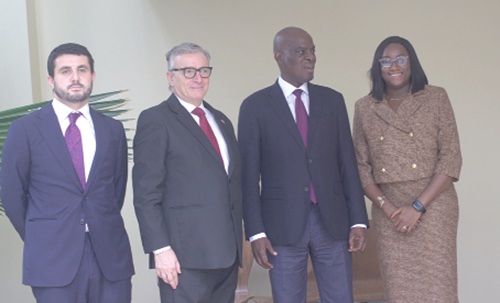
Ghana has partnered the Republic of Malta to strengthen ethics education and promote integrity, citizenship and service among young people through the launch of the Project ETHICS, a values-based learning initiative designed to support schools, teachers and communities.
The project, titled Empowering Tomorrow’s Heroes with Integrity, Citizenship & Service (ETHICS), seeks to develop ethical awareness among learners through storytelling, digital learning tools, teacher training and educational resources.
It aims to help young people build critical thinking skills, understand civic responsibilities and make responsible choices in their communities.
The initiative was launched in Accra last Thursday at an event which brought together representatives from government institutions, education agencies, schools, civil society organisations, diplomatic missions and the media.
Project ETHICS results from a partnership among Ghana, Malta, Step Up Nigeria, the West African Civil Society Institute and some Ghanaian education stakeholders.
The initiative will introduce digital learning resources, teacher capacity-building programmes and school-based activities across 30 pilot schools.
It will train 60 teachers and reach about 2,000 students at the upper primary and junior high levels through digital resources, including animated films, storybooks, games, quizzes and other interactive learning materials.
It will also distribute ethics storybooks, workbooks and teacher guides to support classroom discussions and extend access through school and library networks.
Project ETHICS will provide a platform for educators, government agencies, civil society organisations and development partners to explore ways of strengthening ethics education within Ghana’s education system.
Civil societies, who are the development partners - Dynamic Works Foundation and Young Visionary Leaders Ghana are to explore ways of Strengthening ethics education within Ghana's education system.
Ethics and the future
Speaking at the launch, the High Commissioner of Malta to Ghana, Ronald Micallef, said the growing influence of artificial intelligence had made ethics education more important.
"This is because societies need citizens who can think critically and act ethically in this era of technological change," he said.
Mr Micallef also said the project reflected a shared commitment between Ghana and Malta to develop young people who could respond responsibly to global challenges.
He added that the partnership would not transfer one country’s model to another but would allow the two nations to learn from each other while creating an approach suited to Ghana’s context.
Relevance
For his part, the Minister of Education, Haruna Iddrisu, said Ghana viewed the initiative as part of efforts to build a society founded on strong moral values and responsible behaviour.
“We do so recognising that ethics remains a precursor to the building of a sound moral community and a sound society in which character is built on moral values,” he said.
Mr Iddrisu also stated that Ghana’s revised curriculum would integrate ethics education from kindergarten through primary and junior high school levels to support character development.
He added that the initiative aligned with Ghana’s broader vision of preserving social values and preparing young people to contribute positively to national development.
