


The Ghana Statistical Service (GSS) has joined a growing global movement to move beyond Gross Domestic Product as the primary measure of national progress, arguing that the country's development ambitions demand a more complete picture of what matters to citizens.
Speaking at a policy workshop on "Measuring What Matters in Ghana: Inclusive and Sustainable Growth Beyond GDP," Acting Deputy Government Statistician Francis Bright Mensah said while GDP remains indispensable for tracking economic activity, it fails to capture many dimensions of development that affect people's lives.
"For more than half a century, Gross Domestic Product has stood as the single number by which the world has judged economic success," he said. "But it does not fully capture the broader dimensions of development that matter to people, including equity, environmental sustainability, resilience, inclusion, and well-being."
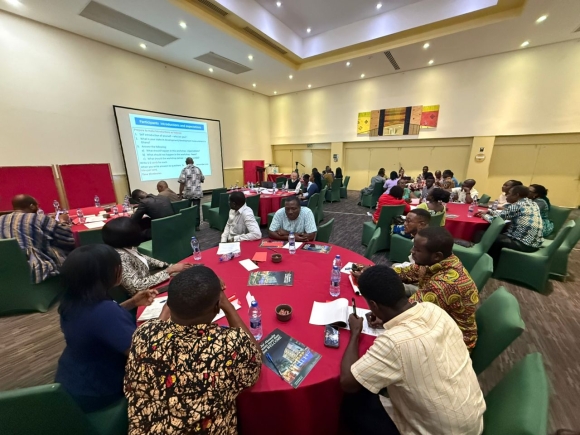
The workshop, organised in partnership with the International Institute for Sustainable Development and the University of Ghana, brought together policymakers, academics, and development practitioners to chart a path towards a more comprehensive national framework.
Professor László Pintér, Senior Fellow at IISD, said moving beyond GDP would help prevent development pathways that impose high environmental costs or deepen social inequality. "By moving beyond GDP, we will not end up with development that creates very high environmental risk and costs, or lead to social inequity, because we have a more wholesome metric that pays attention to those dimensions," he said.
Dr Adu Sarkodie, Senior Lecturer at the University of Ghana, noted that GDP figures often do not reflect the lived realities of citizens. "If the Finance Minister announces a GDP of about US$130 billion, the person on the street wants to ask questions about their life! Am I able to afford? Am I able to get to school?" he said.
Mr Mensah warned that relying solely on GDP could mask serious environmental and social challenges. "A rising GDP may signal economic growth. But if that growth comes with deforestation, land degradation, water pollution, biodiversity loss, or widening inequality, then our picture of progress is incomplete, and a partial picture leads to partial decisions," he said. "We can grow richer on paper while becoming poorer in the things that matter most."
He disclosed that the Statistical Service has already begun laying the groundwork through environmental statistics, multidimensional poverty measurement, and natural capital accounting. The workshop is expected to develop a roadmap for adopting broader development metrics that reflect Ghana's values, environmental realities, and development aspirations.