
The National Commission for Civic Education (NCCE) has called on authorities and persons in positions of influence to ensure fairness and equal access to opportunities in order to promote transparency, accountability and trust in governance systems.
The call was made during a civic education engagement organised at the Komenda Senior High Technical School in the Komenda-Edina-Eguafo-Abrem (KEEA) Municipality of the Central Region, under the Civic Engagements on the Rule of Law and the Fight Against Corruption initiative.
The event, which formed part of the Participation, Accountability and Integrity for a Resilient Democracy (PAIReD) programme, was held on the theme “Building Integrity: Understanding Corruption, Accountability, Influence Peddling, Rule of Law and Ethical Leadership.”
It is being implemented with support from development partners including the European Union, GIZ, the Swiss State Secretariat for Economic Affairs, and the Ministry of Finance to strengthen accountability, civic participation and integrity in governance systems across the country.
Merit
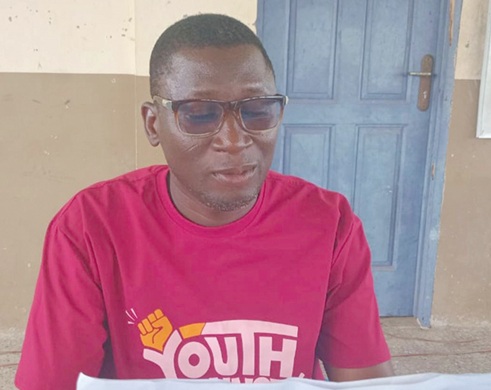
Speaking to the media, the Head of Programmes for the KEEA Directorate of the NCCE, Daniel Abawana, stressed that fairness in the distribution of opportunities remained critical to strengthening national development and reducing perceptions of corruption.
He noted that when access to education, employment and other opportunities was influenced by personal connections rather than merit, it undermined public confidence in governance systems and weakened the country’s development efforts.
Mr Abawana said the engagement with students was part of efforts to instil values of integrity, patriotism and accountability in young people, who he described as the future custodians of the nation’s democratic and governance systems.
He urged students to cultivate ethical leadership qualities as they grow, stressing that leadership should be guided by honesty, responsibility and service to society rather than personal gain or influence.
According to him, young people should resist the temptation to use shortcuts such as bribery, favouritism or undue influence to access opportunities, but rather trust due process and merit-based systems.
“Even when others are using unfair means, you must stand out and do what is right.
Leadership is about integrity and service, not personal connections or shortcuts,” he said.
Influence peddling
For his part, the KEEA Municipal Director of the Commission on Human Rights and Administrative Justice (CHRAJ), Eric Arthur Fynn, cautioned students against corruption and influence peddling, describing them as silent destroyers of national development.
He noted that such practices, if not checked, could become entrenched in student leadership and later reflect in national governance systems.
He encouraged students to reject bribery, manipulation and unethical shortcuts, stressing that leadership should be grounded in service, honesty and accountability.
“Leadership is not about who you know or what you can get for yourself.
It is about service, fairness and responsibility to others,” he emphasised.
