
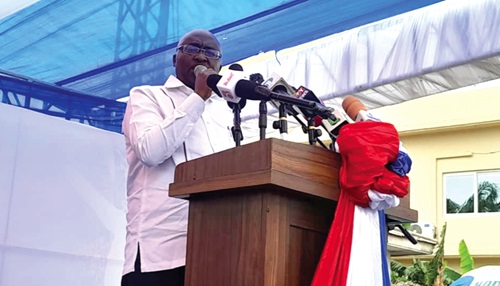
Former Vice President and New Patriotic Party (NPP) flagbearer, Dr Mahamudu Bawumia, has congratulated the newly elected leadership of the Christian Council of Ghana and pledged to work closely with the Council and other faith-based groups.
At its recent General Assembly, the Council elected Rev Enock Nii Narh Thompson, Executive President of the Ghana Baptist Convention, as Chairman, and Rt Rev Dr Abraham Opare Kwakye, Moderator of the General Assembly of the Presbyterian Church of Ghana, as Vice Chairman.
In a congratulatory message, Dr Bawumia expressed confidence in the two leaders to build on the Council's long record of national service.
"I warmly congratulate the newly elected Chairman and Vice Chairman and wish them Godspeed. I have full confidence in their exceptional leadership and integrity to steer the affairs of this nearly century-old, prominent, and impactful ecumenical body," he said.
Commitment to faith-based partnerships
The NPP leader also reaffirmed his commitment to partnering with faith-based institutions, emphasising his vision of working with such bodies to chart a path for a prosperous and peaceful Ghana.
"Consistent with my vision of working with faith-based institutions to chart a path for a prosperous and peaceful Ghana, I look forward to collaborating closely with the leadership and Executive Council of the Christian Council to realise our shared vision for our people," Dr Bawumia added.
Commendation for outgoing Chairman
He further commended the immediate past Chairman, Rt Rev Dr Col (Rtd) Seth Senyo Agbeko, Moderator of the General Assembly of the Evangelical Presbyterian Church of Ghana, for his "distinguished leadership and service" during his tenure.
The Christian Council of Ghana, established nearly a century ago, serves as an ecumenical body bringing together various Christian denominations in the country to address national issues and promote unity among Christians.
The new leadership takes over at a time when faith-based organisations continue to play significant roles in national development, including health, education and social intervention programmes.
