
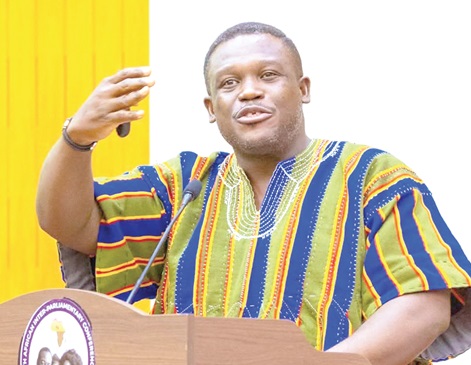
The Minister of Communication, Digital Technology and Innovations, Samuel Nartey George, has called on African lawmakers to take urgent steps to protect children and preserve African family values against what he described as growing harmful foreign influences being spread through digital platforms and artificial intelligence (AI).
He said the rapid expansion of digital technologies and social media platforms was exposing African children to content and ideologies that often contradicted the continent’s cultural values, family systems and traditional norms.
Addressing participants at the 4th African Inter-Parliamentary Conference on Family, Sovereignty and Values in Accra last Thursday, Mr George cautioned that Africa was facing an
“unprecedented digital assault” on its family structures, cultural identity and future generations.
Anti-African AI
Mr George, who is the Member of Parliament (MP) for Ningo-Prampram, revealed that the average African youth spent about seven hours daily on screens, while a significant number of children were exposed to pornography, cyberbullying and harmful online content at increasingly younger ages.
He added that many digital platforms used sophisticated algorithms deliberately designed to shape the behaviour, attitudes and beliefs of young people without parental oversight.
“The algorithms are not trained on African values.
There's a deliberate value injection.
Today, they have gender deconstruction, hyper individualism and anti-family narratives online for our kids.
This is intentional to dilute the Africanness of our homes and the next generation of Africans.
Beauty and social validation, the AI trains African girls to reject natural appearances,” he said.
Mr George expressed concern that most online content consumed by African children originated from foreign platforms and promoted values that undermined respect for parents, elders and communal living, which have traditionally been central to African societies.
He said AI-powered systems were increasingly becoming the primary source of socialisation for children and young people, replacing family interactions, community engagement and traditional forms of guidance.
The minister also criticised what he described as biases in AI systems, arguing that African cultures, languages and identities were often excluded from the data used to train many global AI models.
He said such systems frequently normalised foreign perspectives while failing to adequately reflect African realities and values.
African data
On data governance, Mr George urged African countries to strengthen data sovereignty by ensuring that citizens’ personal information remained on the continent.
He disclosed that the country had adopted measures requiring national data to be hosted locally, stressing that African countries should resist agreements that compromised control over their citizens’ data.
“The estimated value of African data that has been mined externally is $40 billion a year.
That's the value of our data that's been generated every year. How much of that comes to Africa as royalties from big tech? Zero per cent. African data must remain African,” he stated.
Way forward
Mr George further called on African parliaments to reclaim their legislative authority from global technology companies by enacting stronger laws to regulate digital platforms and safeguard children.
Among the measures he proposed were the passage of Digital Family Protection Acts, stricter age verification systems for access to adult content, enhanced online child safety regulations and greater accountability for technology platforms.
He also urged African countries to ratify the Malabo Convention and collaborate through the African Union (AU) to establish common standards on digital governance, artificial intelligence and data protection.
Mr George said Africa’s growing population and digital market gave the continent significant leverage to influence global technology policies if countries acted collectively.T
