
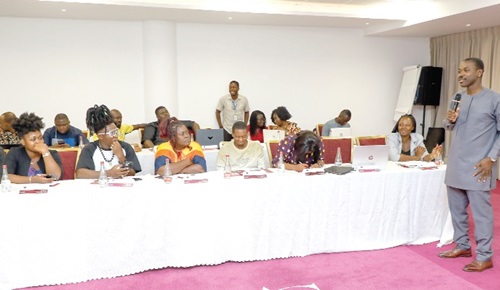
The Ghana Academy of Nutrition and Dietetics (GAND) has launched the National Nutrition Month (NNM) 2026, dedicating the month of July to a campaign to sensitise the population to food safety.
Anchored on the theme, “Food Safety: Everyone’s Responsibility”, the academy will mobilise individuals, communities, food producers, media and policymakers to recognise and act on their specific roles in safeguarding the country’s food supply.
In a statement issued in Accra, yesterday, which also coincides with its seventh anniversary, GAND said there were multiple converging threats to the country’s food systems, placing the nutritional health of the nation under unprecedented pressure.
"Every Ghanaian deserves to eat food that is safe. This July, GAND is taking that message everywhere: to our markets, our schools, our workplaces, our churches and our homes. Food safety is not someone else’s job. It belongs to all of us," the President of GAND, Rev. Prince Baidoo, said.
The statement pointed out that the country faced food safety threats that spanned the entire food system, from the point of primary production to the consumer’s plate, posing interconnected threats that required a coordinated and multi-sectoral response.
“Environmental contamination from illegal artisanal mining activities, widely known as galamsey, pose one of the most acute and underappreciated food safety risks facing the country today.
“Across Ghana’s agricultural heartlands, galamsey operations have contaminated rivers, streams and groundwater with heavy metals, including mercury, arsenic, lead, and cadmium.
These are the same water sources used to irrigate the farms and market gardens that feed Ghana’s population,” the statement said.
Heavy metals
It explained that the heavy metals accumulated in the soil absorbed by crops and into the food chain through vegetables, fish and water and they could not be removed by washing, cooking, or conventional food processing.
It cited studies of water bodies in mining-affected regions, including the Pra, Offin, Ankobra and Birim rivers, testing positive for heavy metal concentrations far exceeding WHO and Ghana Standards Authority permissible limits.
“Fish harvested from these rivers, a critical protein source for communities in these areas, have been found to carry hazardous levels of mercury and lead.
Chronic exposure to these contaminants is associated with neurological damage, kidney failure, reproductive harm, and increased cancer risk, with children and pregnant women bearing the gravest consequences,” it said.
Ultra-processed foods
Besides the environmental challenges, GAND also pointed out that the country faced the rapid proliferation of ultra-processed foods across its markets, supermarkets, schools and street food environments.
GAND stressed that many of the products, formulated to be highly palatable at the cost of nutritional integrity, carried incomplete or misleading labelling, and were being aggressively marketed to children and low-income consumers.
It said safe food must, therefore, extend beyond microbial safety to encompass nutritional safety – which sums up to the right of every Ghanaian to know what they are eating and to access food that supports, rather than undermines, their long-term health.
GAND identifies the phenomenon as an urgent regulatory gap and called on the country to legislate a mandatory, easy-to-understand front-of-pack warning for all processed and packaged food labels (FOPWL) that clearly flag foods high in salt, sugar and unhealthy fats before a purchase is made.
Impact
GAND re-emphasised the immeasurable and dire consequences of the combined threats of environmental pollution and the high salt, oil and sugar in processed foods.
It cited the Ghana Health Service report of non-communicable diseases (NCDs), including hypertension, type 2 diabetes, obesity and cardiovascular disease, now accounting for over 43 per cent of deaths in the country also the leading cause of adult hospital admissions.
