
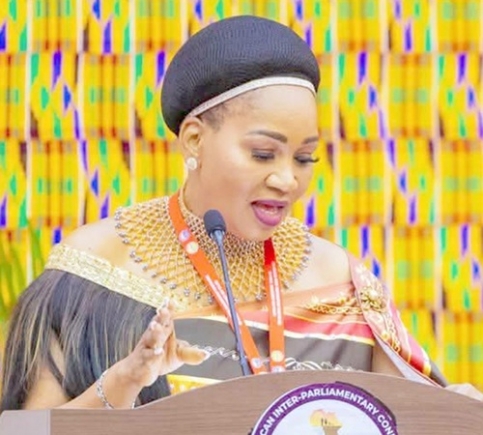
Speakers and lawmakers at the just-ended Fourth African Inter-Parliamentary Conference on Family, Sovereignty and Values have agreed that African nations should protect the sovereign rights of their peoples and guard against cultural imperialism.
They said they must determine their own values, laws, policies and development priorities in accordance with their cultural traditions, constitutional frameworks and aspirations.
“We recognised that true sovereignty may require difficult choices and sacrifices and stressed that Africa's sovereignty, cultural identity and value systems are non-negotiable and must not be compromised in exchange for foreign assistance, political influence, or external conditionalities,” they said.
The communique, which was read out by the Senate President of Eswatini, Lindiwe T. Dlamini, said the participants identified weakening transmission of African values to younger generations due to poverty, youth unemployment, parental neglect, excessive dependence on digital media, and declining engagement with traditional and faith-based institutions and agreed on renewed efforts by families, communities, religious bodies, and educational institutions to strengthen moral formation and cultural education.
“We appreciated the need to strengthen collaboration among African governments, parliaments, traditional authorities, faith-based institutions, civil society organisations and citizens to develop and implement practical frameworks, policies and accountability mechanisms that promote family values, cultural resilience, national sovereignty and African-led solutions to African challenges,” the communique said.
The three-day continental dialogue was held on the theme: “Consolidating parliamentary consensus: Advancing the African Charter on Family, Sovereignty and Values”.
It brought together lawmakers, policy experts, civil society and development partners from across Africa to deliberate on emerging challenges facing African societies and on the collective responsibility of Parliaments to shape responsive, people-centred policies.
Among all the 20 participating countries at the conference, it was only South Africa and Zimbabwe that refused and abstained from the adoption of the African Charter on Family, Sovereignty and Values.
A member of the South African delegation, Zandile Majozi, said her country reserved the right to the adoption of the Charter because it did “speak to our constitution”.
“We speak of every human being having a right to live and be free and express themselves anyhow they want, and we would like to afford all people in South Africa the opportunity to express themselves freely accordingly.
“This Charter also contradicts the legislation that we have done of giving all same-sex marriages equal rights; so, the Charter then does not seem to accommodate our constitution and our legislation of giving legal rights to all humans,” she said.
Growing erosion of African values
The communique said the participants deliberated on the growing erosion of African family structures, cultural identity, communal values and moral foundations resulting from rapid globalisation, urbanisation, migration, technological influences and increasing social fragmentation.
It said they agreed that the family remained the natural and fundamental unit of society and the primary vehicle for the transmission of values, culture, faith and civic responsibility.
“Participants agreed that to preserve African culture, African nations must integrate indigenous African knowledge systems, cultural heritage, ethics and civic responsibility into the educational system to ensure that African children and youth are firmly established in their identity, history and values,” it said.
Safeguarding future generations
Having deliberated on educational systems as an avenue to protect the future of African youth, the delegates acknowledged that there was growing moral uncertainty, sexualised education, cultural fragmentation, and erosion of values in contemporary societies.
That, it said, threatened social cohesion, national identity and the moral foundations on which sustainable development depended.
They, therefore, agreed to advocate policies and programmes that strengthened families in their role of transmitting values, culture, religion, responsibility and respect for human dignity to future generations.
“We agreed to integrate moral, ethical, civic and cultural education into national curricula at all levels and ensure that African educational systems produce citizens of competence, conscience and character who contribute positively to society,” the communique said.
