
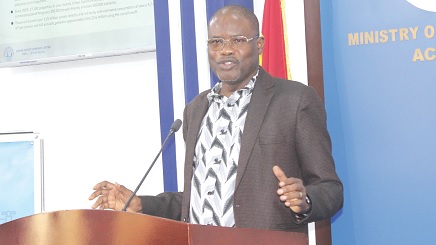
A former Managing Director of the Ghana Water Company Limited (GWCL), Dr Clifford Braimah, has called for stronger enforcement to protect water catchment areas, including possible military involvement, warning that rising pollution could increase the cost of treated water.
Speaking in a radio interview on Citi FM on April 28, 2026, Dr Braimah said contamination of water sources from everyday human activities remains a major threat to safe and affordable water supply.
He explained that pollution entering rivers and valleys does not come from illegal mining alone, but also from routine activities such as vehicle repairs and electrical work.
“The greases, the batteries, the oils, when it rains, the water pushes everything into the lowlands. That is where our valleys are, that is where our rivers are,” he said.
Dr Braimah stressed that protecting catchment areas, where water collects before treatment, is the most effective way to maintain water quality.
“If you do not keep the catchment area clean, you will face challenges in treating the water. The first stage of water treatment is the catchment,” he said.
He said stronger enforcement is needed and suggested that water resource protection should be treated with urgency.
“If I had my way, water resources should be managed by the military because it is more important to our health and well-being,” he said.
Dr Braimah warned that growing pollution in rivers would make treatment more difficult and costly, especially where heavy metals are involved.
“Some of the heavy metals, it is very difficult to remove them from water. What it means is that there will be an increase in the cost of the water you will be drinking,” he said.
He said preventing pollution at source remains the most cost-effective approach to keeping tariffs within reach of consumers.
Beyond catchment protection, Dr Braimah proposed a review of the water distribution system. He suggested that GWCL should concentrate on bulk water production, while other operators handle distribution.
“All we need from Ghana Water is bulk supply. A private person can take it from there and distribute,” he said.
He explained that most water losses occur during distribution rather than production, and said operators who pay for the water they distribute would be more likely to reduce losses.
Dr Braimah also pointed to the role of district assemblies in planning and development. He said assemblies must supervise construction in their areas and make sure water systems are considered before communities expand.
“The assembly should be at the centre of development in their area,” he said.
On financing, he advised that public-private partnership arrangements in the water sector should be structured in cedis rather than foreign currency.
“For you to come and say that I should pay in dollars when my tariff is in cedis, there is a mismatch. I will not support that,” he said.
Dr Braimah warned that population growth, ageing infrastructure and rising pollution would place more pressure on water systems if action is delayed.
“Our rivers are drying up, water sources are under pressure, and infrastructure is weakening. We must act now,” he said.
