
Roads are a significant form of transportation in Ghana.
They facilitate easy movement, connect towns and cities, and play a key role in socio-economic development.
The SDG 11 target 11.2 emphasises the need for safe, affordable, accessible, and sustainable transport for all and improving road safety.
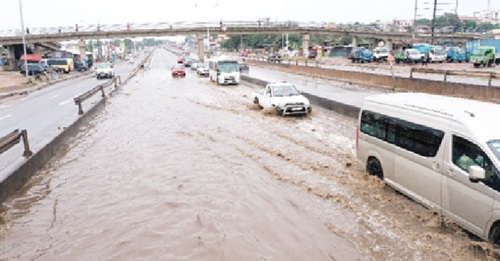
Most roads in the country become impassable, destroyed, and inaccessible during the rainy season.
Some newly constructed roads begin to wear and tear with the onset of the rains.
Flooding on roads is exacerbated by choked drainage systems or the lack of drainage systems, the destruction of wetlands, and the obstruction of watercourses, all of which worsen flooding and accelerate the erosion of some roads.
Potholes and gullies increase in size with the rains, increasing travelling time, affecting economic activities, and posing a financial burden on vehicle owners.
These roads, coupled with poor lighting systems, make driving difficult at night and a major recipe for motor crashes.
Poor road networks are a major challenge in our rural settings, where most of our food crops are cultivated.
With poor roads, poverty levels are still high in rural areas because food crops are not easily transportable to the cities, and intermediaries buy at low prices from these farmers and sell at exorbitant prices in the city.
These farmers are not able to get the full benefit from their labour.
This also contributes to the increased post-harvest losses.
Road maintenance is vital to ensuring the safety of all road users, ensuring that roads last longer to serve their purpose, reducing road accidents, saving the public purse by preventing more costly repairs, improving the public transportation system, and maintaining the aesthetic value of roads.
As the rainy season approaches, there is a need to adopt the preventive method over the curative in the maintenance of our roads (i.e., patching of potholes, replacements of malfunctioning streetlights, clearing of overgrown weeds, sealing of cracks on roads to avoid seepage of water, and keeping pavement markings visible.
With changing rainfall patterns and intensity as a result of climate change, there is a need for the enforcement of laws regarding wetlands and the construction on watercourses.
The engineering of our roads should include wider and improved drainage systems, the introduction of urban greening strategies and the dredging of water bodies.
Road maintenance is vital to ensure the safety of all road users; it ensures that roads last longer to serve their purpose, reduces road accidents, saves the public purse by preventing more costly repairs, improves the public transportation system and ensures that the aesthetic value is maintained.
The various agencies and stakeholders in the road industry should adopt the preventive method over the curative method for our roads to ensure that our roads are safe, functional, and meet the users’ needs.
Badu Eugenia B.
E-mail:
