
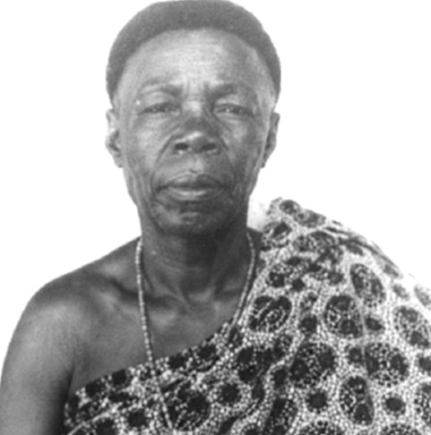
This year marks eighty years since Omanhemaa Nana Afia Abrafi II ascended the stool as Queenmother of the Takyiman Traditional Area.
Next year, God willing, she will celebrate her one hundredth birthday.
These two milestones, taken together, present a rare opportunity to reflect on an extraordinary life of service and on the enduring significance of traditional leadership in Ghana.
Few traditional leaders in Ghana can claim such longevity, continuity and influence.
Even fewer can say they have witnessed almost an entire century of social, political and cultural transformation while remaining an active participant in the affairs of their people.
Enstooled in 1946, Nana Afia Abrafi II assumed office during the closing years of British colonial rule.
Since then, she has lived through independence, republicanism, military administrations and constitutional democracy.
She has observed every Head of State and President from the colonial era to the present day.
Throughout these changes, she has remained a respected figure within the traditional governance structure of Takyiman.
The queenmother and Akan political tradition
The reign of Nana Afia Abrafi II also offers an opportunity to draw attention to one of the most important institutions in Akan political culture: the office of the queenmother.
The queenmother is far more than a ceremonial figure.
Within the Akan system, she serves as custodian of royal lineage, adviser to the chief, guardian of custom and tradition, advocate for women and children, and a vital voice in governance and conflict resolution.
She plays a central role in the selection of chiefs and helps preserve the moral and social fabric of society.
Long before discussions about women’s representation entered contemporary political discourse, Akan queenmothers exercised authority, shaped public affairs and influenced the direction of their communities.
Nana Afia Abrafi II stands as one of the finest examples of that enduring tradition.
Service beyond the palace
Her contribution to Takyiman extends well beyond customary responsibilities. Historical records and oral accounts indicate that the first meeting of the Bono-Kyempem Federation, which championed the creation of the former Brong-Ahafo Region, took place in her palace.
She worked closely with traditional authorities during the period that culminated in the establishment of the region.
She also played an important role in the development of the internationally renowned Techiman Market, today one of the largest and most vibrant trading centres in West Africa.
Her involvement in efforts that led to the establishment of the Techiman District Assembly further illustrates the constructive role traditional leaders can play in local and national development.
For many decades, she has devoted considerable attention to social welfare, particularly the well-being of young people.
Through visits to schools and engagements with students, she championed moral discipline, encouraged educational attainment and spoke openly against teenage pregnancy and other social challenges confronting the youth.
Her influence has also reached beyond Takyiman.
Through her participation in Emancipation Day celebrations, Black History Month activities and the Joseph Project, she contributed to efforts that strengthened the bonds between Ghana and the African diaspora.
A living archive of Takyiman
Perhaps the most remarkable aspect of her reign lies in the continuity she represents.
She has served alongside four successive Omanhenes of Takyiman: Nana Akumfi Ameyaw III, Nana Kwakye Ameyaw II, Osabarima Dotobibi Takyi Ameyaw III and Oseadeeyo Akumfi Ameyaw IV.
This unique experience has made her a living repository of historical knowledge and institutional memory.
Through her recollections, important chapters in the history of Takyiman, Bono and Ghana are preserved.
Yet her success cannot be attributed to public service alone.
Throughout her life, Nana Afia Abrafi II has maintained a reputation as an industrious businesswoman and farmer.
She engaged actively in farming and became one of the most successful women farmers in the area.
Even at an advanced age, she continued to supervise agricultural activities, including cocoa cultivation.
Those who know her often point to her disciplined lifestyle and careful eating habits as important factors behind her remarkable longevity and continued vitality.
Her life reflects the values of hard work, moderation, self-discipline and personal responsibility.
In addition, she has earned widespread respect for her efforts to preserve marriages, settle family disputes and restore harmony within communities.
Countless individuals and families have benefited from her wisdom, patience and sound judgment.
As Ghana continues to modernise, the need to document the lives and contributions of distinguished traditional leaders becomes increasingly important.
Their experiences constitute invaluable historical resources that future generations deserve to inherit.
Eighty years on the stool is not simply a personal achievement. It is a tribute to resilience, wisdom, service and unwavering commitment to community.
It is also a reminder that the institutions of chieftaincy and queenmotherhood remain important pillars of Ghanaian society.
When a nation fails to preserve the memories of its elders, it risks losing the wisdom that should guide its future.
The story of Nana Afia Abrafi II is, in many respects, the story of modern Takyiman itself—a story of continuity amid change, tradition alongside progress and leadership founded upon service.
As the nation reflects on this extraordinary milestone and anticipates her centenary next year, it is fitting to celebrate not only a remarkable woman but also an enduring legacy that has shaped generations.
The writer is a scholar, author, researcher, communication consultant and cultural development advocate
Email:
