
I came back to Ghana in economy class, in the same position, skewered chicken somewhere after the wing of the plane, with a lot of reflections.
There is an invisible line running through every international academic conference. It divides attendees cleanly into two camps- the haves and the have-nots.
The haves usually come from countries where there is a budget for research and neurosurgeons have to spend a certain amount of money earmarked for the year or it disappears.
The have-nots usually come from where I come from, where neurosurgeons have to sponsor themselves to attend.
The neurosurgeons at the conference may ply the same trades, but the camps are geographically disparate.
The haves and have-nots
The have-neurosurgeons usually stay in the five-star conference hotel whose pictures are emblazoned on the brochures and the other neurosurgeons are usually in hotels dotted at varying distances from the venue, some starless.
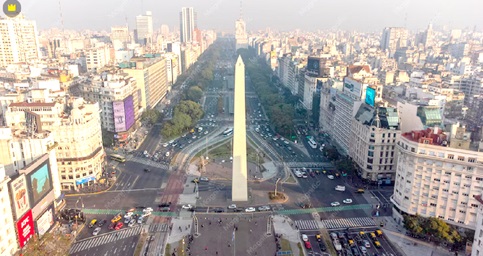
As usual, I was living away from the conference hotel… not too distant from the important meetings, but far enough. Buenos Aires is a beautiful city.
Living on the other side of town from the conference meant I saw a bit of it as I walked to and fro every day.
The city made me think of one word: resilience.
In the beginning, it was easy to miss that this country has been recovering from the doldrums of an economic near-collapse, at one point with hyperinflation rivalling that of war-torn nations.
It has all the trappings of modernity: beautiful boulevards, long pavements, functional subways, trains and buses zooming by on schedule.
It's on the small turns that Google Maps would take me on my walk every morning and evening that one would see the neglected rubbish in the seam joining pavement and road.
The multiple well-wrapped-up delinquents huddled at various street corners during working hours, huddling against the sub-10-degree cold.
The occasional person walking over to ask for money and sometimes other things.
The skyscrapers are boarded up because the business collapsed, still standing with a majesty that should have been left behind in the valleys of financial disaster, but just can not be shed.
The architecture is just too immaculate for the majesty to disappear.
Black people stand out on the streets of Buenos Aires. Maybe it's because Argentina abolished slavery very early.
The colour lines that are very clear in multiple cities, where distinct roles depend on melanin levels in the skin, do not exist here.
In my four days there, I met three black people and this is me doing quite a bit of walking during rush hour and using multiple Ubers.
And it was difficult to ignore the stare that continues until you meet the gaze.
And some continued to stare long enough so you could see the question in their eyes: what are you doing here?
Priorities
The other thing that Buenos Aires made me think about was my country.
I could see right away what was important to these people. In their struggle against the troubles brought by economic mismanagement, it was clear what mattered to them.
Security, functional public transport, sanitation, governance, tourism, specialised medicine seemed to top their list of priorities.
It reminded me of an organised retreat when surrender is unavoidable.
How great armies choose their last stands and decide that, no matter what, they will not give up certain things, because after the war, the people must find a way to thrive.
My country has never experienced the levels of hyperinflation this country did.
Yet, I see what has been allowed to run down here, and wonder what we retained as last stands in the battles that economic difficulty brought.
Argentinian neurosurgery continues to be among the best in the world, innovating, publishing, and presenting new ways of doing procedures with small budgets to the world.
They have 1,200 neurosurgeons for 46 million people.
Here, sometimes I hear administration staff in corridors of power, openly wondering whether the 36 neurosurgeons for the 36 million people in this country are too many.
I already know how difficult it will be to employ the ones who graduate next year.
What are the priorities that we will not allow economic difficulty/mismanagement to devastate? Funerals?
• The Writer is a neurosurgeon
