


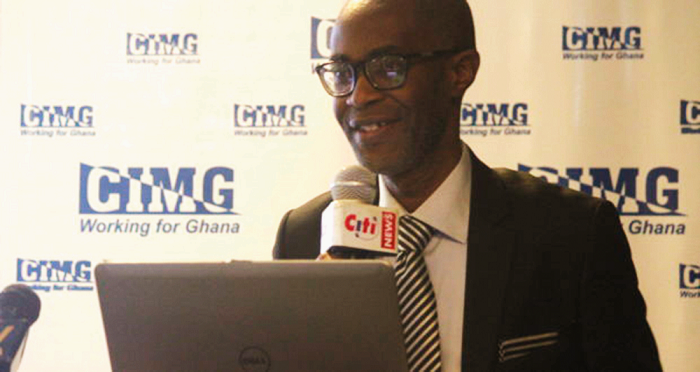
The Managing Director of Nielsen West Africa, Mr Lampe Omoyele, has urged Ghanaian marketers not to cut spending on advertising in the face of the current economic crisis.
He said in times like these, companies have to rather look at how they can use advertising to make them achieve the needed results.
Mr Omoyele said this at a forum organised by the Chartered Institute of Marketing Ghana (CIMG) in Accra.
The presentation was on the theme: “Winning with the consumer and shopper.”
He said a research by Nielsen indicated that advertising had a considerable influence on consumers and shoppers with over 38 per cent of purchases being influenced to a very large extent through advertising.
He said that was followed by promotion and CSR which stood at 35 per cent and 24 per cent respectively.
Mr Omoyele however cautioned advertisers to make content key in their advertising because its study showed that awareness from advertising locations were very high but content was not deployed or memorable.
He said the study further revealed that more than 91 per cent of people were aware of outdoor advertising locations but only 41 per cent of them could actually remember what the advert was about.
He further indicated that 83 per cent and 80 per cent of people were aware of print and broadcast advert locations respectively but only 13 per cent and 31 per cent of them could remember the contents.
Ghana’s purchasing power
Mr Omoyele also mentioned that Ghana’s consumer purchasing power was one of the lowest in sub-Saharan Africa.
He attributed the phenomenon to increasing inflation, cedi depreciation and taxes among other things which he said might have accounted for the reduced spending of the Ghanaian consumer.
He said Ghanaian consumers were redefining their value using switch, swap and squeezing. “When there is inflation, when wages do not increase to correspond then consumer’s disposable income declines. Ghana’s inflation has increased significantly in the last 24 months from 14 per cent to over 18 per cent in 2016,” he said.
He pointed out that the country had also faced some challenges such as commodity price decrease, supply and infrastructure issues while wages have not improved, resulting in weakened consumer purchasing power. “When that happens, consumers begin to rationalise. This means they don’t have enough money to spend and they rationalise by doing away with some of the things they feel are not important,” he added.
He stated that though the Ghanaian economy was on the road to recovery, brands that would survive or stay in competition were those that would be able to provide the needs of the consumer.
Relevant practices
The President of CIMG, Mr Kojo Mattah, also added that corporate organisations and individual operatives within must align themselves with the current and relevant practices in order to excel.
He said the best practices would make them relevant both in and out of ‘good season’.
“We can only get to do this if we get to understand the market, the economy and the people among which we do our businesses,” he stated.
He said the CIMG had, therefore, in recent years been leading the campaign to educate, encourage and make its corporate entities understand that much of its problems could be solved when it understands the market in which it operated. — GB