

Kerosene is a common household commodity used mainly as fuel. It is a petroleum distillate and one of the more dangerous hydrocarbons found in homes.
Besides its use in cooking, particularly among low-income households, kerosene lamps or lanterns remain an important source of lighting in some towns and villages.
The danger kerosene poses in the household lies not only in its inflammability, which can cause severe burns, but also in accidental ingestion by children.
Its high volatility, low viscosity and low surface tension make it particularly likely to be inhaled or aspirated into the respiratory system.
Kerosene is poorly absorbed after ingestion, but absorption is rapid when it is inhaled or aspirated into the lungs.
The extent of absorption after ingestion depends on the quantity consumed, with larger amounts potentially resulting in greater absorption into the bloodstream.
Children may accidentally drink kerosene because it is often stored in containers originally meant for water or other beverages. Bottled-water containers have become a common means of storing kerosene in many households.
Another contributing factor is the practice among some adults of drinking directly from bottles in front of children, who may imitate the behaviour.
There is also a perception that kerosene is less dangerous than other fuels such as petrol. Consequently, while petrol is often carefully stored away, kerosene may be left in open or easily accessible places.
Although this article focuses on kerosene ingestion, the underlying principle applies to accidental poisoning involving other substances, including pesticides, acids, corrosive chemicals and turpentine.
It is important to note that because kerosene has an unpleasant taste, most children who accidentally ingest it take only a small amount and often spit it out once they realise it is not a beverage. In many cases, the smell of kerosene on the child’s breath or clothing alerts adults to what has happened.
As already explained, kerosene is poorly absorbed when swallowed, and children generally ingest only small quantities. The greater danger, however, comes when kerosene enters the lungs.
No palm oil
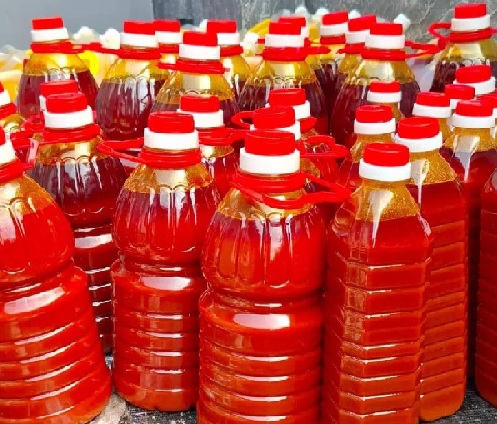
Despite this, there is a widespread practice of giving children palm oil after accidental ingestion of kerosene. The practice is also used following ingestion of pesticides, turpentine, acids and other substances.
The rationale appears to be to induce vomiting and force the substance out of the stomach. However, this practice can be dangerous.
Because kerosene is highly volatile, forcing a child to vomit can cause the substance to vaporise and be inhaled into the lungs. Its fat-soluble nature allows it to penetrate deeply into the tracheobronchial tree, causing inflammation and bronchospasm, or narrowing of the airways.
Kerosene can also interfere with oxygen exchange and damage the delicate membranes of the lungs. It may cause bleeding, fluid accumulation in the lungs (pulmonary oedema), disruption of surfactant — a substance essential for keeping the lungs open — and other inflammatory complications.
Once kerosene reaches the lungs, it can also be rapidly absorbed into the bloodstream and affect the brain, depending on the quantity absorbed.
Palm oil itself can compound the problem. Because it may be given in large quantities to induce vomiting, it can also be aspirated into the lungs, resulting in a condition known as chemical aspiration pneumonitis.
This can contribute significantly to respiratory distress and hospitalisation.
In severe cases, a child who has aspirated kerosene or palm oil may require mechanical ventilation. Unfortunately, ventilators are not always readily available and, where available, treatment can be expensive.
Many of these complications can be prevented through proper storage of household chemicals and fuels, keeping them out of children’s reach, and seeking medical attention promptly after accidental ingestion.
Seek medical attention
It is important to reiterate that serious complications following kerosene ingestion are often associated with aspiration into the lungs, particularly after attempts to induce vomiting.
If a child accidentally drinks kerosene or another potentially harmful substance, the safest course of action is to take the child to the nearest clinic or hospital for assessment and observation.
Palm oil should never be used to induce vomiting, regardless of what substance a child has accidentally swallowed.
Let us all contribute to keeping the lungs of our children safe. Palm oil and other unproven concoctions should never be given to children to force them to vomit after accidental poisoning.
The writer is a member of the Paediatric Society of Ghana and Director of Medical Affairs, Korle Bu Teaching Hospital.
