
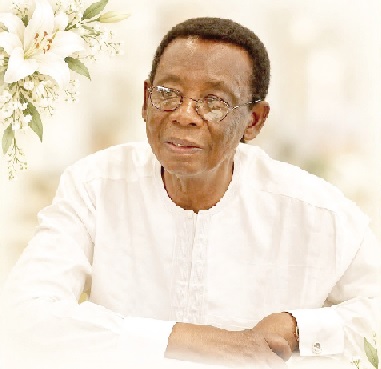
Ghana boxing has lost one of its most influential patrons and administrators, following the death of “Ambassador” Ray Quarcoo, the 90-year-old philanthropist whose decades of investment in fighters, coaches and administrators helped shape careers from Bukom to the Olympic and world championship stages.
Quarcoo died last Friday, October 2, triggering an outpouring of tributes from some of the biggest names in Ghanaian boxing for a man remembered not merely as a federation president, but as a benefactor who repeatedly used his resources and influence to create opportunities for the sport.
Long-time Black Bombers trainer Kwasi Ofori Asare, captured the depth of the loss as,“When a whale dies, the whole ocean mourns”.
“Ghana has lost our whale, Ambassador Ray Quarcoo, our Uncle Ray, our big man, the father of Ghana boxing to some of us from Bukom to the Olympics.”
Quarcoo served as president of the Ghana Amateur Boxing Federation — now the Ghana Boxing Federation (GBF) — from 2010 until his resignation in April 2014, although his involvement in the sport stretched back decades.
He became vice-chairman of the Ghana Boxing Authority in 2001 and supported the Black Bombers in various capacities before eventually taking charge of the amateur federation.
His tenure placed athlete development and international exposure at the heart of the federation’s programme.
Quarcoo supported junior and senior national boxers to compete at world championships while opening pathways for Ghanaian coaches to receive advanced International Boxing Association training.
Among the fighters who benefited from opportunities under his leadership were Abdul Wahid Omar, Azumah Mohammed, Musah Rahman Lawson, Sulemana Tetteh, Gibrine Ahmed, Maxwell Amponsah and Frederick Lawson.
His investment extended beyond athletes.
Quarcoo enrolled Ofori Asare and Vincent Akai Nettey in IBA-accredited coaching programmes, helping them become Ghana’s first coaches to secure three-star and two-star IBA licences respectively — technical qualifications that strengthened the country’s coaching capacity.
His support also touched the careers of some of Ghana’s most celebrated professional fighters, including Azumah Nelson, Ike Quartey, Alfred “Cobra” Kotey, Joshua Clottey, Joseph Agbeko and Isaac Dogboe.
Former IBF welterweight world champion Clottey summed up his passing in striking terms.
“The biggest tree has fallen. May his gentle soul rest in deserved peace,” he said.
Former Ghana Boxing Authority president Peter Zwennes remembered Quarcoo as “a larger-than-life person, loved by all”, while GBF President Dauda Fuseni said the veteran administrator played an “instrumental role in the development, growth and projection” of Ghana boxing.
Former GBF President George Lamptey and veteran boxing manager Yoofi Boham were among other prominent figures to pay tribute, reflecting the breadth of Quarcoo’s relationships across amateur and professional boxing.
The Sports Writers Association of Ghana (SWAG), of which Quarcoo was Lifetime Patron, also mourned a man whose influence extended beyond the ring.
SWAG described him as a distinguished diplomat, entrepreneur and passionate supporter of boxing whose generosity, warmth and counsel strengthened both Ghanaian sport and sports journalism.
“A great warrior, you may be gone physically but forever remain in our hearts,” SWAG President Kwabena Yeboah said.
“You were the gentleman’s gentleman, caring and committed to the national cause.”
Quarcoo’s legacy is difficult to measure simply in offices held or tournaments attended.
For many Ghanaian fighters, coaches and administrators, “Uncle Ray” was the man who funded an opportunity, facilitated international exposure, opened a door or offered support when few others would.
That explains why his passing has resonated so deeply across the boxing fraternity.
Ghana boxing has produced world champions and Olympic medallists, but behind many of those journeys have stood figures prepared to invest in the sport without stepping into the spotlight.
For a generation, Ray Quarcoo was one of those figures. The titles will remain in the record books. His deeper legacy lives in the careers he helped make possible.
