
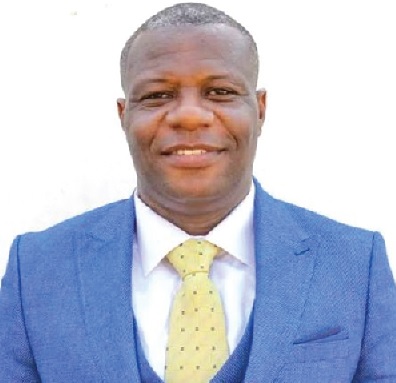
The President of the Ghana Taekwondo Federation (GTF), Frederick Otu Lartey, has outlined an ambitious grassroots development agenda aimed at transforming the sport across all regions as he seeks a historic third term in office.
In an exclusive interview with the Daily Graphic, the veteran sports administrator revealed that his re-election bid is backed by a comprehensive blueprint to take taekwondo to every corner of the country, ensuring Ghana produces world-class athletes capable of competing on the global stage.
Mr Otu Lartey, who has been at the helm of the federation for the past eight years, made it clear that his decision to contest again is firmly within the confines of the GTF constitution.
"I told the executive members I want to contest and the constitution does not bar me from contesting," he stated emphatically. "The constitution permits a president to contest for a further term in office in accordance with its provisions on tenure and re-election."
His declaration comes in the wake of a petition signed by 15 top officials comprising national board members and regional chairpersons, urging him to rescind his earlier decision to step down after his second term.
The petition argued that Mr Otu Lartey's first term was burdened by legal disputes that hindered full implementation of his vision, making the second term the true period of fruition.
Vision
The 53-year-old sports administrator's vision is rooted in the recent Leadership Retreat held at Plus 33 Hotel at Sakumono from April 10 to 11, which brought together the executive board, regional association chairpersons and key stakeholders including the National Sports
Authority Director General Yaw Ampofo Ankrah and the Ghana Olympic Committee President Richard Akpokavie.
Central to his agenda is a nationwide awareness campaign that will introduce taekwondo to communities that have long been underserved by the sport.
"First of all, the GTF will start with awareness programmes in all the regions, including the Volta Region," he said. "We will create awareness in the regions and recruit development coaches. Stakeholders have been invited to participate in this awareness drive."
The federation has already commenced a National Licence Coaching Course aimed at training 40 unlicensed coaches from the 10 member regional associations to impart knowledge down to the club level, as part of the broader Development of National Sports Systems (DNSS) programme.
