
The Speaker of Parliament, Alban Sumana Kingsford Bagbin, has warned that the growing influence of money in politics is gradually shutting ordinary citizens out of governance and turning public office into a financial investment.
He said the rising cost of political participation was distorting democracy, weakening public trust and creating a political system in which financial strength, rather than ideas and commitment to public service, could determine who gained political power.
“When money becomes the principal determinant of political success, democracy risks becoming inaccessible to ordinary citizens.
“Public office is then viewed less as a public trust and more as an investment to recover it. Political competition shifts from a campus of ideas and services to a contest of financial power,” Mr Bagbin said.
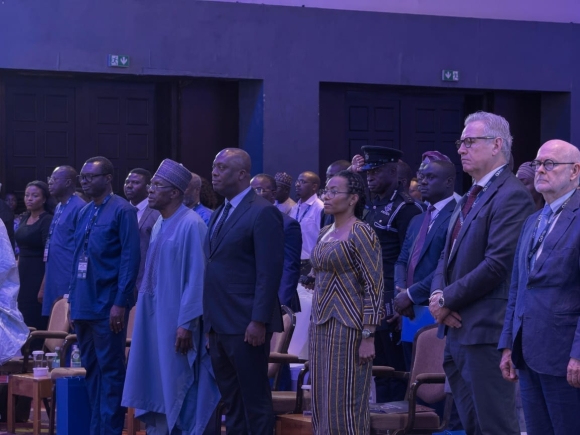
The Speaker made the remarks at the opening of the three-day High-Level Regional Convening on the Financialization of Politics in Africa in Accra yesterday.
The meeting brought together senior government officials, anti-corruption institutions, electoral bodies, civil society organisations, researchers, development partners and governance practitioners to discuss the growing influence of money in African politics and explore practical reforms.
It is being convened by the African Union Advisory Board Against Corruption, the Community of Practice on Political Finance in Africa, the Ghana Centre for Democratic Development, Open Society Foundations and Transparency International Ghana.
It seeks to raise public and policy attention to the impact of money on politics and translate research on political financing into actionable policy reforms.
Global threat
Mr Bagbin said the challenge was not peculiar to Ghana or Africa but had become a global threat to democratic governance.
“Across Africa, and indeed the world, democracy is under increasing pressure. As a matter of fact, democracy is backsliding,” he said.
He cited declining public trust, illicit financial flows, state capture, opaque campaign financing and the increasing commercialisation of political competition as some of the threats confronting democratic institutions.
“Ultimately, citizens lose confidence in democratic institutions and become increasingly disengaged from the political process,” the Speaker said.
Drawing on his political experience since 1992, Mr Bagbin said the cost of participating in elections had risen significantly over the years.
He recalled financing much of his early political campaign from his personal savings and later relying on his wife's savings when his resources became inadequate.
“That was the cost of deciding to go to serve my people,” he said.
Mr Bagbin said the realities of political financing were often more complicated than public discussions suggested, particularly because politicians faced financial demands from constituents and communities.
“You don't go to the House of Chiefs with empty hands. And when you visit your constituency, and you don't fight for their education, and you don't fight for their health, and you don't give money to the poor, and the rest, they say they haven't seen you,” he added.
The Speaker cautioned against branding politics itself as inherently corrupt, insisting that the conduct of individuals was the real problem.
“It's not a dirty game. It's the people playing the politics that are dirty,” he said.
Time to act
Mr Bagbin said decades of conferences and discussions on corruption must now give way to practical action.
“I believe this is the time to act. It's not just about passing laws. It's not just about resolutions.
“It's about appreciating on a daily basis what we see is right, what we see is honest, what we see is clean, what we see is integrity. This must be put into practice,” he added.
He urged participants at the Accra meeting to propose realistic and sustainable reforms that would improve transparency in political financing and protect public service from private enrichment.
“We must move beyond diagnosis to implementation,” the Speaker stressed.
He also raised questions about how African countries could finance political participation without leaving individual candidates to carry enormous campaign costs or allowing wealthy interests to dominate political processes.
“How do we support decent, honourable citizens who have offered to save the nation and the people from being solely responsible for shouldering the cost of that process?” he asked.
Mr Bagbin said political financing should be discussed openly and transparently, with all stakeholders recognising elections and democratic governance as a common public good.
He said Parliament had a major responsibility to translate international anti-corruption commitments into laws, budgets, oversight and measurable reforms.
“There is no way any institution in Ghana can say they are independent from the oversight responsibility of Parliament,” he stated.
Democracy at risk
The Member of Parliament for Klottey Korle, Dr Zanetor Agyeman-Rawlings, also cautioned that the increasing monetisation of politics posed a serious threat to Africa's democracies.
“Across our continent, the cost of entering and remaining in politics is increasing,” she said.
She mentioned internal party primaries, nomination fees, transportation, general election campaigns and the growing expectations on politicians to pay school fees and medical bills as some of the financial pressures associated with political participation.
“Our democracies are at risk of unraveling in this trend of monetisation of our politics. This is unsustainable, and it undermines the aspirations of our citizens,” Dr Agyeman-Rawlings said.
She said corruption had been identified as a major national security concern and stressed the need to address poverty, inequality and weaknesses in governance alongside political finance reforms.
Dr Agyeman-Rawlings particularly called for greater civic education and the deliberate inclusion of young Africans in efforts to strengthen democratic governance.
The Deputy Minister of Finance, Thomas Nyarko Ampem, who delivered a statement on behalf of the Vice-President, said the high cost of elections was increasingly preventing capable citizens from entering politics.
“Money has always been part of politics. The challenge arises when money determines who participates, who wins elections and whose interests are served after victory,” he said.
“That is no longer simply a political concern. It is a question of democratic integrity,” he added.
Mr Ampem said women, young people and many public-spirited citizens were disproportionately affected by the financial barriers to political participation.
“Increasingly, those with vision, competence and a genuine commitment to public service are priced out before they even begin,” he said.
“The issue is not a shortage of people willing to serve. Rather, the cost of entry has become so high that many who would strengthen our democracies are discouraged from participating,” he added.
He acknowledged that Ghana still lacked a comprehensive legal framework for political party and campaign financing and said further reforms were required to improve disclosure, accountability and public confidence.
“Ghana still lacks a comprehensive legal framework of the political party and campaign financing,” he said.
Mr Ampem said stronger disclosure requirements, enforcement and appropriate spending limits were necessary, but cautioned that regulation alone would not address the problem.
“Can we organise political life so that ideas rather than money become its defining force?” he asked.
“How do we encourage campaigns that persuade voters instead of purchasing support?”
He expressed the hope that the Accra meeting would produce a practical roadmap for political finance reforms across Africa.
“Let us build political systems in which integrity is rewarded, public service is accessible, and money strengthens democracy instead of distorting it,” Mr Ampem said.
The regional convening follows the adoption of Resolution 11-7 under the United Nations Convention Against Corruption, which has renewed international attention on transparency in the financing of political parties, candidates and electoral campaigns.
Over the three days, participants are expected to examine reforms that can strengthen transparency, accountability and democratic integrity and help African countries move from research and policy discussions to concrete implementation.
