
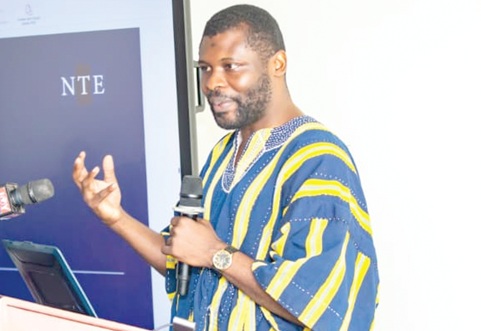
Legal practitioner, Dr Noah Ephraim Tetteh Adamtey, has called for broader stakeholder participation in the constitutional reform process to ensure that proposed amendments reflect wider national interests.
He said political parties, Parliament, civil society organisations (CSOs), religious bodies, the media and other stakeholders should have meaningful opportunities to deliberate on the recommendations of the Constitution Review Commission (CRC) before they are translated into legislation.
Dr Adamtey made the call at a one-day media engagement on constitutional reforms organised under the Centre for Democratic Development (CDD-Ghana)’s Citizen Platform on Constitutional Reform (CPCR) stakeholder engagement programme last Thursday.
Wider consultation
He said the position of government on the CRC report should not be the sole basis for drafting the proposed constitutional amendment bills.
He explained that a broader stakeholder forum could consider the recommendations and determine which ones should be accepted or rejected before the outcome was forwarded to the Constitutional Review Implementation Committee (CRIC) for drafting.
According to him, CRIC had indicated that its role was largely technical — to translate government policy positions into draft legislation.
Dr Adamtey urged the media to sustain public discussion on contentious reform proposals, saying that could help bring issues to the attention of policymakers.
He also encouraged CSOs to submit well-reasoned proposals to government and publicise them to generate wider debate.
He further called on Parliament to make constitutional reform bills accessible to the public when they were presented, enabling CSOs and other stakeholders to scrutinise the proposals and provide technical input to legislators.
“We need to be knocking on the doors of CRIC and government before it even gets to Parliament and even after the bills are submitted to Parliament,” he said.
Media independence
President of the Ghana Independent Broadcasters Association (GIBA), Abdulai Awudu, said the reforms should strengthen the independence of media institutions and extend constitutional protections to reflect the realities of the digital media environment.
He said GIBA supported sectoral participation in the nomination of members of the National Media Commission (NMC), constitutional protection for the NMC’s core functions and co-regulation between the NMC and the National Communications Authority (NCA), particularly in decisions relating to broadcast authorisations.
He also called for the passage of the Broadcasting Bill, 2024, stressing that key media freedoms should be constitutionally protected rather than left solely to Acts of Parliament.
Protection for media
Executive Secretary of the Private Newspapers and Online News Publishers Association of Ghana (PRINPAG), George Wilson Kingson, also called for stronger safeguards for media freedom under the proposed reforms.
He proposed that the NMC’s standard-setting powers be exercised through transparent and consultative processes involving media owners, journalists and civil society, with sanctions graduated and proportionate and subject to judicial review.
On state-owned media, he called for constitutional guarantees for the tenure of editors and boards, budgetary oversight to prevent financial manipulation and powers for the NMC to publicly report cases of political interference.
He also stressed the need for clear delineation between the mandates of the NMC and NCA to avoid regulatory overlap.
