
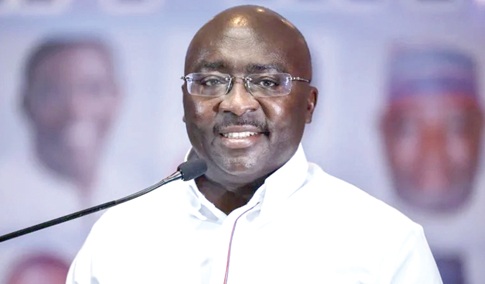
The flag bearer of the opposition New Patriotic Party (NPP), Dr Mahamudu Bawumia, has said the life and legacy of the late Prime Minister, Professor Kofi Abrefa Busia, should inspire both leaders and the youth to embrace patriotism, sacrifice and dedicated service to the nation.
He stressed the need for greater investment in young people, saying Ghana's future would depend largely on how well the country nurtured and empowered the next generation to contribute meaningfully to national development.
Dr Bawumia made the remarks when he chaired a commemorative programme organised by the Lighthouse Chapel International to mark what would have been Prof. Busia's 113th birthday at Wenchi in the Bono Region last Saturday.
The event featured the screening of the film The Prof: A Heart of Faith, which chronicled Prof. Busia's journey from a nine-year-old boy at Wenchi to Ghana's Prime Minister in September 1969.
Reflecting on the lessons from the film, Dr Bawumia described Ghanaian youth as gifted, creative and innovative, saying they possessed the capacity to transform the country's fortunes if given the necessary opportunities.
He said Prof. Busia's life should encourage young people to pursue excellence and commit themselves to serving the nation.
"Our young people are gifted, creative, bold and connected to the world.
They want to build businesses, use technology, develop farms and industries and solve problems," he said.
Dr Bawumia said young people should not be pitied but empowered through deliberate investment in education, skills development and entrepreneurship to unlock their full potential.
He urged policymakers and other stakeholders to prioritise initiatives that would create opportunities for the youth to play a more meaningful role in national development.
Busia's legacy
The commemoration also saw the dedication of a chapel by the Lighthouse Chapel International to the people of Wenchi.
The church was attended by members of Prof. Busia’s family.
Prof. Busia, an eminent academic, sociologist and politician, served as Prime Minister of the Second Republic from 1969 to 1972.
Born into the royal family of Wenchi, he became the first African to obtain a doctorate in Social Anthropology from the University of Oxford in 1947.
He also became the first African to occupy a professorial chair at the then University College of the Gold Coast, now the University of Ghana, where he established the country's first Department of Sociology.
His administration pursued policies aimed at promoting economic stability and consolidating civilian rule.
Although he died in exile in England on August 28, 1978, at the age of 65, his political philosophy continues to shape the country’s democratic tradition, particularly that of the New Patriotic Party.
