
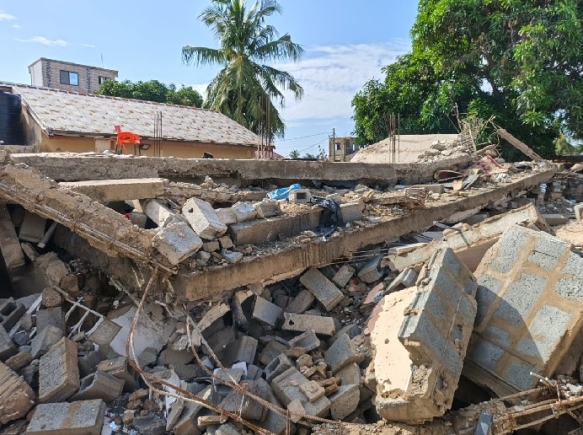
A Joint Technical Investigative Committee has attributed the recent building collapse in Madina to a combination of regulatory violations, structural weaknesses, and unsafe construction practices.
The committee’s preliminary findings revealed that the project was undertaken without the required building permits, approved architectural and structural drawings, and other statutory approvals.
According to a press release signed by Ing. Prince Kas-Avortri, Executive Secretary, Structural Sub-division, GhIE, the stop-work orders issued by the municipal authorities were ignored, allowing construction to continue.
"A Joint Technical Investigative Committee comprising structural engineering specialists and statutory representatives from the Structural Subdivision of the Ghana Institution of Engineering (GhIE), the Institution of Engineering and Technology, Ghana (IET-Gh), and the Architecture Registration Council (ARC) has completed its preliminary assessment of the building collapse that occurred within the La Nkwantanang Madina Municipal Assembly (LaNMMA)," the statement read.
The statement said investigators established that an unauthorized additional floor was being added to the structure at the time of the collapse, placing excessive loads on a building that had not been designed to support them.
It said occupants were reportedly still using parts of the building while construction was ongoing.
The preliminary engineering assessment identified major structural deficiencies, including discontinuous load-bearing columns, inadequate support systems, poor-quality concrete, and improperly detailed reinforcement.
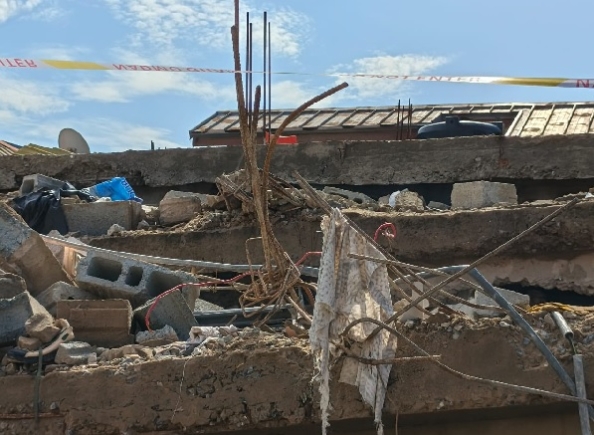
These weaknesses compromised the building’s structural integrity and led to a progressive “pancake” collapse, where the failure of key elements triggered the sequential collapse of multiple floors.
"Preliminary findings from the investigation indicate that the collapse was caused by a combination of serious regulatory breaches, structural deficiencies, and unsafe construction practices," it read.
"The project was undertaken without the requisite statutory approvals, including approved architectural and structural engineering drawings, building permits, and other mandatory technical documentation."
The committee has collected concrete and steel samples for laboratory testing and recommended that the site remain secured while unstable sections of the remaining structure are dismantled.
It emphasized the need for strict compliance with building regulations, professional supervision, and approved engineering standards to prevent similar tragedies.
"The Committee has also recommended that the National Disaster Management Organisation (NADMO) maintain a secured perimeter around the site while unstable portions of the remaining structure are carefully dismantled to safeguard the public and facilitate further investigations," it stated.
"The Ghana Institution of Engineering, the Institution of Engineering and Technology, Ghana, and the Architecture Registration Council reaffirm their commitment to supporting the relevant authorities in determining accountability, strengthening enforcement mechanisms, and promoting safer building practices across the country," it added.
