
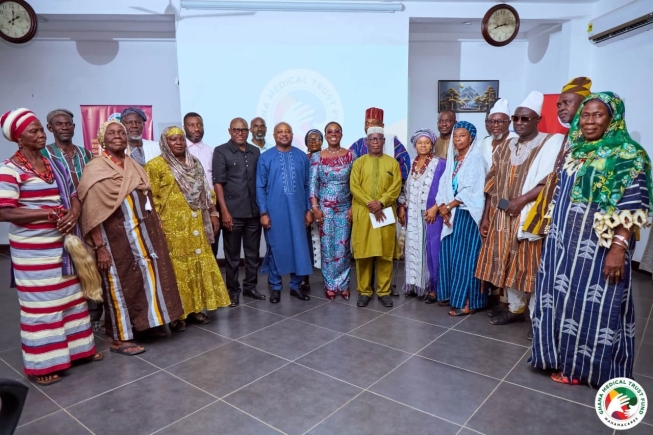
The Paramount Chief of the Pulima and Gandawii Traditional Area in the Sissala West District of the Upper West Region, Kuoro Osman Deiwia Nankpa III, has thrown his weight behind the Ghana Medical Trust Fund (GMTF), drawing from a personal battle with an acute kidney condition that cost him more than GH¢60,000 in 2008.
The traditional ruler said his experience exposed him to the enormous financial demands of managing serious illnesses and the emotional and economic strain they place on families, particularly those without the resources to afford specialised medical care.
Speaking at a stakeholder engagement and town hall meeting organised by the GMTF as part of its regional sensitisation tour in the Upper West Region, Kuoro Nankpa III urged residents, traditional authorities, corporate institutions and other stakeholders to rally behind the Fund to ensure its sustainability. He observed that illness could abruptly disrupt the plans, livelihoods and financial stability of families, making it imperative for the country to strengthen interventions that prevent people from being denied essential treatment because of their inability to pay.
He described the GMTF as one of the thoughtful and life-saving interventions introduced to support Ghanaians, commending President John Dramani Mahama for instituting what he considered a visionary health policy. According to him, the Fund could become one of the enduring legacies of President Mahama. The Paramount Chief also appealed for the availability of heart surgeons in the Upper West Region to improve access to specialised treatment and reduce the difficulties patients face in seeking advanced medical care outside the region.
In a welcome address, the Upper West Regional Minister, Charles Lwanga Puozuing, said the success of the Fund would depend largely on collective efforts to ensure that its interventions reached the people who needed them most. He assured the GMTF of the support of the Upper West Regional Coordinating Council and urged the media to play an active role in educating the public and correcting misconceptions about the Fund's operations.
The Administrator of the GMTF, Adjoa Obuobia Darko-Opoku, explained that the Fund was established to provide financial support to eligible patients living with non-communicable diseases while strengthening healthcare delivery through the provision of essential medical equipment to health facilities.
The Acting Medical Director of the Upper West Regional Hospital, Dr Philip Baabiineh, identified cardiovascular diseases, kidney conditions and other non-communicable diseases as significant causes of deaths in health facilities across the region. He pledged the hospital's commitment to facilitating access to GMTF support for eligible patients.
The Upper West Regional Director of the Ghana Health Service, Dr Josephat Ana-Imwine Nyuzaghl, called for a community-driven approach to public education on the Fund, proposing the engagement of Community Health Nurses to educate residents at the district and community levels. He also called for stronger diagnostic capacity at the Upper West Regional Hospital, including the provision of a Magnetic Resonance Imaging machine, to improve diagnosis and access to specialised healthcare in the region.
