
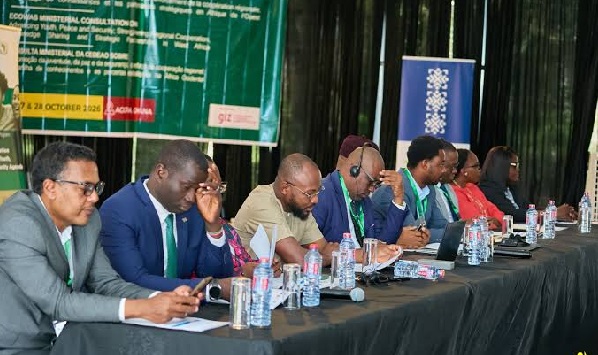
Ghana has called for stronger efforts to ensure that young people’s participation in peace and security initiatives translates into real influence over decisions, access to resources and measurable improvements in their safety and inclusion.
The call was made by Osman Abdulai Ayariga, who delivered remarks on behalf of the Minister for Youth Development and Empowerment, George Opare Addo, at the ECOWAS Ministerial Consultation on Youth, Peace and Security in Accra.
He said that although regional and continental frameworks had created opportunities for youth engagement, the next priority was to translate those commitments into practical outcomes that improved young people’s lives.
“Our next task is to ensure that participation translates into influence, access to resources and measurable improvements in safety and inclusion,” he said.
Theme
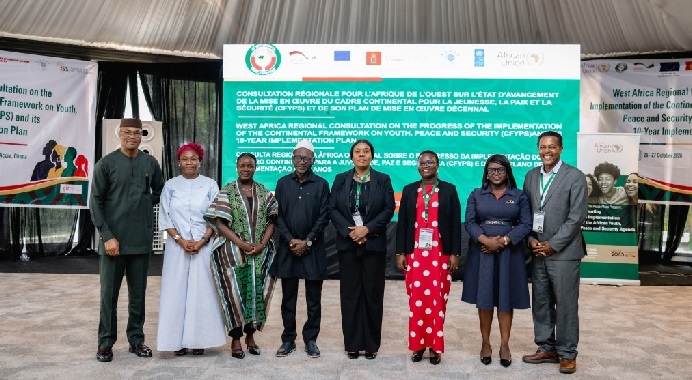
The consultation, held from October 27 to 28, 2026, under the theme “Advancing Youth, Peace and Security in West Africa: Strengthening Regional Cooperation, Knowledge Sharing and Strategic Partnerships,” brought together government representatives, regional institutions, development partners and youth organisations across West Africa to strengthen cooperation on youth-related peace and security challenges.
It was meant to assess progress in implementing the African Union's Continental Framework on Youth, Peace and Security (CFYPS) and its 10-Year Implementation Plan (2020–2029) at regional and national levels.
The event was funded and supported by Germany, the European Union, and Denmark through GIZ-implemented projects (AUPSG and EPSG).
Notable among the dignitaries were Governance and Peacebuilding Adviser, UNDP Regional Office for West and Central Africa, Mrs Nadine Rugwe, Director, UNFPA Regional Office for West and Central Africa, Dr Sennen Hounton, UNDP Representative, Mrs Enobong Momo, ECOWAS Resident Representative to Ghana, H.E. Amb. Mohamed Lawan Gana and Executive Director of the West Africa Network for Peacebuilding Ghana (WANEP-Ghana), Mrs Levinia Addae-Mensah.
Peace and Security
Mr Ayariga said peace and security in West Africa were closely linked to the opportunities available to young people, their confidence in public institutions and their ability to influence decisions. However, unemployment, exclusion, violence, substance abuse and limited participation continued to undermine their potential.
He noted that the 20th anniversary of the African Youth Charter, adopted in 2006, provided an opportunity to renew commitments to youth rights and participation, particularly in peacebuilding, conflict prevention and conflict resolution.
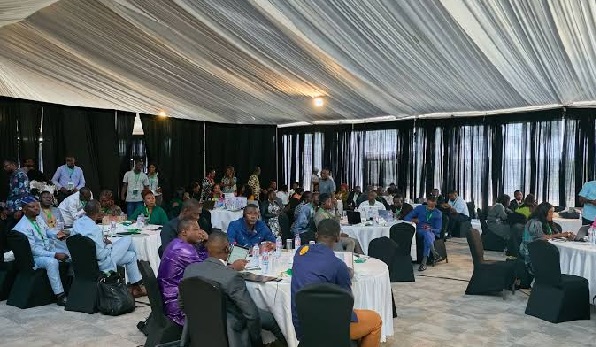
He said Ghana’s National Youth Policy 2022–2033 identified youth conflict and peacebuilding as a priority, while the country was developing its first National Action Plan on Youth, Peace and Security to translate policy commitments into coordinated action.
"The National Youth Authority is coordinating the process through a National Technical Working Group and wider stakeholder consultations, with support from institutions including the Kofi Annan International Peacekeeping Training Centre, UNFPA, UNDP, GIZ, the European Union, the National Peace Council and UNEP," he said.
According to Mr Ayariga, consultations have highlighted challenges including economic exclusion, community tensions, substance abuse, digital risks, environmental pressures and protection concerns.
He cited initiatives such as the National Youth Parliament, the Ghana Youth Federation and district and regional youth committees as mechanisms intended to institutionalise youth participation.
He also stressed that inclusion must remain central to the process, with young men, persons with disabilities and young people in underserved communities given accessible opportunities to participate in decision-making and benefit from interventions.
Reaffirming Ghana’s commitment to working with ECOWAS, the African Union, member states and development partners, he called for clear priorities, defined responsibilities and sustained follow-up to ensure young people played a meaningful role in building a peaceful, inclusive and resilient West Africa.
Inclusion
The Executive Director of the West Africa Network for Peacebuilding Ghana (WANEP-Ghana), Mrs Levinia Addae-Mensah called for a shift in West Africa’s Youth, Peace and Security agenda from policy commitments and training programmes to measurable outcomes driven by the meaningful involvement of young people in decision-making.
She said governments and development partners must assess not only the activities and support provided to young people but also the changes achieved as a result of their participation in peacebuilding and security processes.
“We must indeed measure what we’re doing with young people, but let it go beyond just what we do for them and look more towards what changes have happened because young people have been meaningfully involved,” she said.
She commended the progress made since the adoption of United Nations Security Council Resolution 2250 in 2015, including the development of national action plans, coordination mechanisms and regional frameworks recognising young people as partners in peace and security. WANEP, she said, had supported the development of national action plans in about nine countries across the region.
However, she identified four areas requiring renewed attention: moving from commitments to measurable impact; advancing youth participation into genuine influence over decisions; investing in opportunities alongside training and capacity building; and strengthening trust and partnerships between generations.
She stressed that young people should not merely be invited to meetings but given opportunities to shape agendas, influence decisions and share responsibility for outcomes.
Sustainable Peace
The Economic Community of West African States (ECOWAS) reaffirmed its commitment to working with member states, regional institutions, development partners, civil society organisations and young people to strengthen peace and security across West Africa.
The ECOWAS Resident Representative to Ghana, H.E. Amb. Mohamed Lawan Gana, said meaningful collaboration among the various stakeholders was essential to advancing the Youth, Peace and Security (YPS) agenda and building sustainable peace in the region.
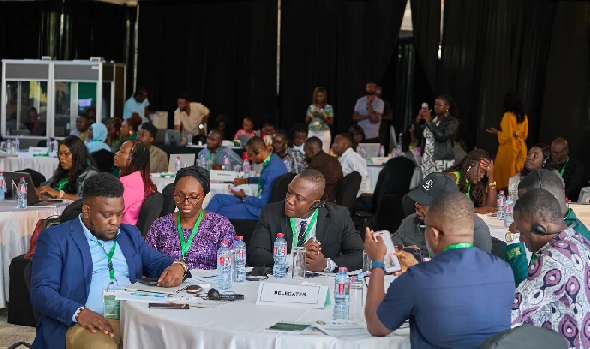
“ECOWAS remains fully committed to working with member states, regional institutions, development partners, civil society, and young people to advance this agenda and strengthen the foundations for sustainable peace across the region,” he said.
Ambassador Gana said the region continued to face threats from violent extremism, political instability, socioeconomic exclusion and other drivers of insecurity, making the active involvement of young people critical to conflict prevention and peacebuilding.
He stressed the need to move beyond recognising young people’s contributions to creating opportunities for them to influence decisions, shape policies and deliver tangible results.
“The next decade of youth, peace and security in West Africa must be defined not by the strength of our declarations but by the results we deliver,” he said.
He noted that young people should not be treated merely as beneficiaries of peace and security interventions but as partners, decision-makers and agents of change.
The ECOWAS representative also called for greater attention to the participation of young women, whose contributions to mediation, community dialogue and peacebuilding were often constrained by limited access to leadership, financing and representation.
He said meaningful participation required more than inviting young people to meetings, but also providing access to decision-making, adequate resources and safe spaces for leadership.
He further emphasised the need to align the Youth, Peace and Security agenda with the Women, Peace and Security agenda.
Ambassador Gana identified stronger national ownership, institutional coordination, sustainable financing and effective monitoring as key priorities for translating regional and continental commitments into practical outcomes.
Addressing young leaders, he encouraged them to speak candidly, challenge assumptions and propose practical solutions grounded in their communities.
“Your participation is not symbolic. It is indispensable,” he said, adding that institutions had a responsibility to listen and establish structures through which young people’s contributions could shape decisions and deliver lasting change.
