
The International Federation of Women Lawyers (FIDA-Ghana) has raised concerns over what it describes as critical gaps in government funding for survivors of domestic violence, following an analysis of Ghana’s 2026 National Budget.
The organisation warns that many survivors remain without access to safe shelters, leaving them vulnerable to further violence and trauma.
According to FIDA-Ghana’s findings, the Domestic Violence Fund has seen sharp swings in funding over the past several years, with allocations peaking at roughly GH¢2.7 million in 2024 before plunging dramatically in 2025.
The 2026 budget restored some of that funding, bringing the allocation to GH¢1.6 million, the third-highest since 2021, though still well below the 2024 high point and, FIDA-Ghana says, far short of what survivors actually need.
What is most striking is what the analysis found missing altogether: despite the Ministry of Gender, Children and Social Protection receiving GH¢11.6 million in capital expenditure for 2026, none of it has been earmarked for building or expanding shelters.
FIDA-Ghana also found no evidence of development-partner funding directed toward shelter construction, leaving a significant gap in the national response.
The Programme Manager, Noelle Appiah, argued that safe shelters were not a peripheral service but a foundational one, saying that without secure housing, survivors who received legal, medical or psychosocial support often had nowhere to go but back to the homes they fled, undermining the very protections meant to help them.
In response, FIDA-Ghana has issued an urgent appeal to development partners, corporate institutions, foundations and individual donors to help fund the establishment of safe, sustainable shelters across the country.
Such facilities, the group says, would offer survivors immediate protection, temporary housing, psychosocial care, legal assistance and a pathway toward long-term recovery.
The call extends beyond private donors to government itself as FIDA-Ghana is also urging the Ministry of Finance and the Ministry of Gender, Children and Social Protection to commit to predictable, sustained funding for the Domestic Violence Fund, including an increase of at least 30 per cent over 2023 baseline levels, with funds released within the first quarter of each fiscal year to avoid service disruptions.
The organisation is also calling for stronger coordination among the agencies involved in supporting survivors — including the Domestic Violence Secretariat, the Domestic Violence and Victim Support Unit (DOVVSU), and local health facilities — so that survivors can access care without delay.
It further recommended building partnerships with NGOs, faith-based groups, and private-sector actors to establish shelters in all 16 regions of Ghana.
Investing in shelters, the organisation contends, is an investment in justice, dignity and the broader prevention of violence nationwide.
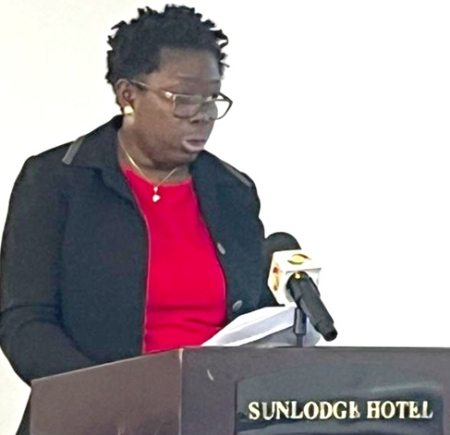
The Executive Director, FIDA-Ghana, Susan Aryeetey, in an address, said the findings revealed important gaps that require urgent attention, saying these are not simply numbers on a spreadsheet but represented the lived realities of women and children who are unable to access safety, justice and healing because critical services remained underfunded or unavailable.
Writer’s email:
