
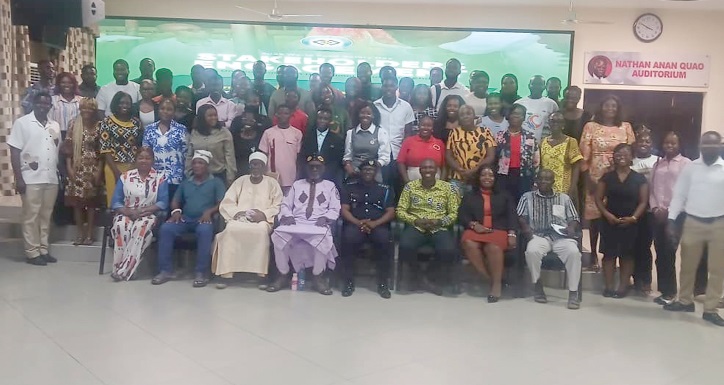
The Risk Communication Officer at the Veterinary Services Directorate (VSD), Dr Benjamin Kissi Sasu, has called for stricter enforcement of food safety laws and increased public education.
He said weak enforcement, poor sanitation, inadequate infrastructure and limited veterinary services continued to expose the public to food-borne diseases and other public health risks despite the country’s many laws, policies and institutions regulating food safety.
Dr Sasu made the call when he addressed this year’s World Food Safety Day and stakeholders’ engagement in Accra last Thursday.
The event brought together stakeholders from the University of Ghana Food Science and Nutrition Department, the School of Veterinary Medicine, the School of Agriculture, African Women in Animal Resources and Farming, and other partners in the food value chain.
It was on the theme: “From burden to solutions: Safe food everywhere”.
Conditions
Dr Sasu said poor sanitary conditions in markets, fish landing sites and slaughterhouses, as well as the misuse of veterinary drugs and lack of cold storage facilities, remained major challenges affecting food safety in the country.
He also urged farmers to use only approved veterinary medicines and observe withdrawal periods before selling animal products, and promptly report disease outbreaks to veterinary authorities.
He further called for improved surveillance systems, investment in laboratories, upgraded infrastructure at slaughterhouses and fish landing sites, as well as stronger collaboration among all agencies involved in food safety.
Public health
A Medical Doctor at the La Dadekotopon Municipal Health Directorate, Dr Caryn Agyeman Prempeh, described food safety as a critical public health priority and said unsafe food contributed to the rising cases of diarrhoeal diseases, such as cholera, typhoid fever and food poisoning, particularly during the rainy season.
She said food safety was not only an agricultural or veterinary issue but a major public health concern.
According to her, health facilities continued to manage preventable foodborne diseases, which also increased healthcare costs and placed financial burdens on households.
Dr Prempeh said although animal-sourced foods such as meat, poultry, milk, eggs and fish were essential for nutrition, they could become hazardous when contamination occured during production, slaughter, processing, transportation or storage.
She added that addressing food safety required a “One Health approach” involving human, animal and environmental health sectors to tackle threats such as antimicrobial resistance and zoonotic diseases.
She, therefore, reiterated the need for continuous public education and stronger collaboration among stakeholders such as the Ghana Health Service, Veterinary Services Department, Food and Drugs Authority, environmental health units and local government authorities.
Technical input
For his part, the Technical Lead for Animal Health System Strengthening Project at the British High Commission, Dr William Adu, expressed satisfaction with the continuity of the Food Safety Awareness initiative, which is in its fourth year since it was first sponsored by the United Kingdom (UK) Animal and Plant Health Agency.
He said the platform brought together stakeholders from food science and nutrition, veterinary medicine, agriculture, African Women in Animal Resources and Farming, and other actors in the food value chain to examine food safety challenges.
