
The Inter-governmental Action Group Against Money Laundering in West Africa (GIABA) has stepped up efforts to deal with the drug menace in the sub-region.
Measures include training of law enforcement agencies to deepen their understanding of the trends and patterns of perpetrators.
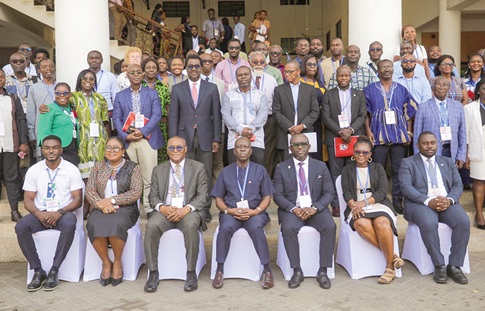
The acting Principal Officer, Communication and Advocacy of GIABA, Timothy Melaye, who said this in an interview with the media at a three-day regional training for journalists in the GIABA member states on investigative reporting of economic and financial crimes, said the training had become necessary because perpetrators continuously changed their trends.
Additionally, he said the group had strengthened the financial systems in the sub-region to ensure that movement of funds, particularly criminal funds, was restricted, while suspicious transactions and activities were reported.
The sub-region remains an important transit and storage region for international drug trafficking, particularly cocaine.
Recent seizures suggest that trafficking organisations were moving large consignments through different West African countries, including Ghana, rather than relying on a single route.
GIABA is West Africa’s regional body against money laundering, terrorist financing and proliferation financing. It is charged with the responsibility to strengthen its member states' capacity to prevent and control money laundering and terrorist financing in the region.
The group currently draws its membership from 12 West African countries.
Vulnerabilities
Mr Melaye, who also spoke on behalf of the Director-General of GIABA, Mam Cherno Jallow, said the sub-region continued to face evolving threats related to Money Laundering (ML), Terrorist Financing (TF), and Proliferation Financing (PF).
He mentioned key vulnerabilities to include high-level corruption resulting in illicit financial flows largely from the extractive sector, the rise of terrorism-related activities, the misuse of virtual assets, drug trafficking, and weak regulatory oversight of designated non-financial businesses and professions.
Mr Jallow urged member states to put in place workable systems such as effective laws, persuasive and proportionate in terms of the necessary sanctions that come with them.
He, however, said the fight against money laundering and terrorist financing would not be fully effective without the active involvement of the media, particularly investigative journalists.
Mr Jallow, therefore, said the training was intended to sharpen the skills of journalists in reporting on economic and financial crime; equip them with modern investigative techniques and also share regional initiatives in the fight against money laundering and terrorist financing.
Trends
In a speech read on his behalf by the Director, Legal, of the Financial Intelligence Centre (FIC), Benjamin Ofori, the Chief Executive Officer of the FIC, Albert Kwadwo Twum Boafo, said the nature of economic and financial crime was changing rapidly, with criminals exploiting technology, digital financial services, complex corporate structures, virtual assets and cross-border transactions.
“This requires an understanding of corporate structures and the ability to examine financial records, identify beneficial owners, analyse procurement information, connect seemingly unrelated transactions and use open-source intelligence. Above all, it requires asking the right questions about who owns and moves assets,” he said.
