
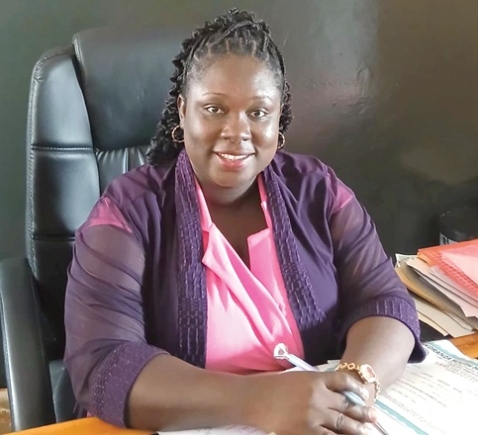
The Local Government Service Association of Physical Planners (LoGSAPP) has urged traditional authorities, state institutions and citizens to work together to tackle the root causes of the country's perennial flooding challenges.
The association said sustainable flood management could only be achieved through strong institutions, responsible land administration, effective sanitation management, proper drainage infrastructure and the strict enforcement of planning laws.
The National President of LoGSAPP, Gifty Nyarko, told the Daily Graphic that while the demolition of illegal structures and the removal of encroachments from watercourses were necessary interventions, lasting solutions would require addressing the underlying factors contributing to the problem.
In that regard, she urged the authorities to hold all actors involved in illegal developments on watercourses and wetlands accountable, adding that the country's flooding crisis stemmed from failures across the land administration and development chain.
She urged the government to increase investment in spatial planning, development control, environmental protection and disaster risk reduction.
Ms Nyarko explained that effective flood management depended on well-resourced institutions and stronger enforcement of planning regulations.
She said some Metropolitan, Municipal and District Assemblies (MMDAs) continued to face challenges in enforcing planning laws due to inadequate logistics, weak political support, interference and insufficient funding.
The LoGSAPP president appealed to chiefs, including the National House of Chiefs, to strengthen oversight of customary land administration and discourage the allocation and sale of lands situated within watercourses and wetlands.
Endorsement
She said the association supported the recent call by the Ga Mantse, King Tackie Teiko Tsuru II, for decisive action against developments on watercourses and other environmentally sensitive areas.
She commended the Ga Mantse for what she described as his courage and leadership in drawing national attention to one of the major causes of the country's recurring flooding problem.
Ms Nyarko said flooding was often the result of poor land administration, indiscriminate waste disposal, weak enforcement of planning laws, inadequate drainage systems and the continued development of land in flood-prone areas.
She stressed that accountability should not be limited to occupants and developers alone but must extend to all actors involved in the land administration and development process.
"Persons who knowingly allocate, sell, approve, register, facilitate, survey or develop lands within watercourses, wetlands and other protected areas should equally be held responsible for the consequences of such actions," she said.
Support prosecution
Ms Nyarko challenged Metropolitan, Municipal and District Chief Executives (MMDCEs), law enforcement agencies and regulatory institutions to support investigations and prosecutions where evidence of wrongdoing existed, regardless of the status of those involved.
"The question is no longer whether flooding is a problem. The question is whether we have the courage, commitment and political will to hold every responsible actor accountable, irrespective of position, influence or status," she said.
Writer's email:
