
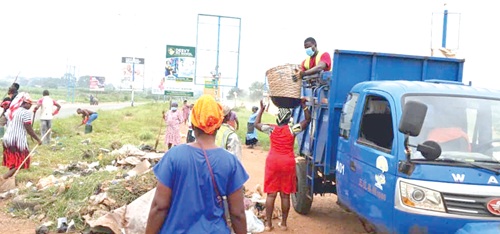
The Ashaiman Municipal Assembly is set to introduce waste segregation at source and strengthen the enforcement of sanitation by-laws to improve sanitation in the municipality.
The Municipal Chief Executive (MCE), Freeman Tsekpo, who announced the measures after leading a two-day post-flood clean-up operation across the municipality, acknowledged that the indiscriminate disposal of refuse continued to undermine sanitation efforts.
He explained that repeated clean-up campaigns and regular desilting exercises over the past year had yielded only temporary results because of the municipality's increasing population and expanding commercial activities.
To provide a lasting solution, he said the Assembly was shifting its focus from routine clean-up exercises to an integrated waste management system centred on source segregation, recycling and efficient refuse collection.
Mr Tsekpo disclosed that the Assembly was collaborating with private recycling firms, including a plastic recycling company and Safisana, which converts biodegradable waste into useful products, to establish a sustainable waste segregation programme.
Stakeholders
He announced that a sanitation stakeholders' forum would soon be organised to discuss implementation strategies and secure the cooperation of residents, businesses and waste management operators.
The MCE further revealed that more than 70 tricycles had already been registered to provide waste collection services throughout the municipality.
He also expressed concern about the activities of some informal waste collectors who collect refuse from households for a fee but later dump the waste on road medians and other unauthorised locations.
Mr Tsekpo said the Assembly would intensify public education while applying the full force of the law against offenders.
As part of the renewed enforcement drive, he announced that the Assembly had activated its sanitation by-laws under the Operation Clean Your Frontage initiative, which requires all property owners and occupiers to keep the surroundings of their premises clean.
He said notices had already been served on businesses operating along major roads, warning that those who failed to comply would face prosecution.
To strengthen enforcement, environmental health officers have been supported by personnel recruited through the Youth Employment Agency.
On concerns over temporary waste transfer sites, Mr Tsekpo explained that the Assembly had previously resorted to using the site near the Presby Traffic Light area because delays at the final disposal site often prevented skip containers from being emptied on schedule.
Waste transfer
He, however, indicated that the reopening of the Zoomlion transfer station at Adjei Kojo would significantly improve waste evacuation, with the Presby site to be used only in emergency situations.
Mr Tsekpo expressed optimism that sustained public cooperation, effective enforcement of sanitation regulations and improved waste management practices would help transform Ashaiman into a cleaner, healthier and more environmentally sustainable municipality.
He commended residents, security agencies, traditional authorities and sanitation volunteers for their active participation in the two-day exercise.
